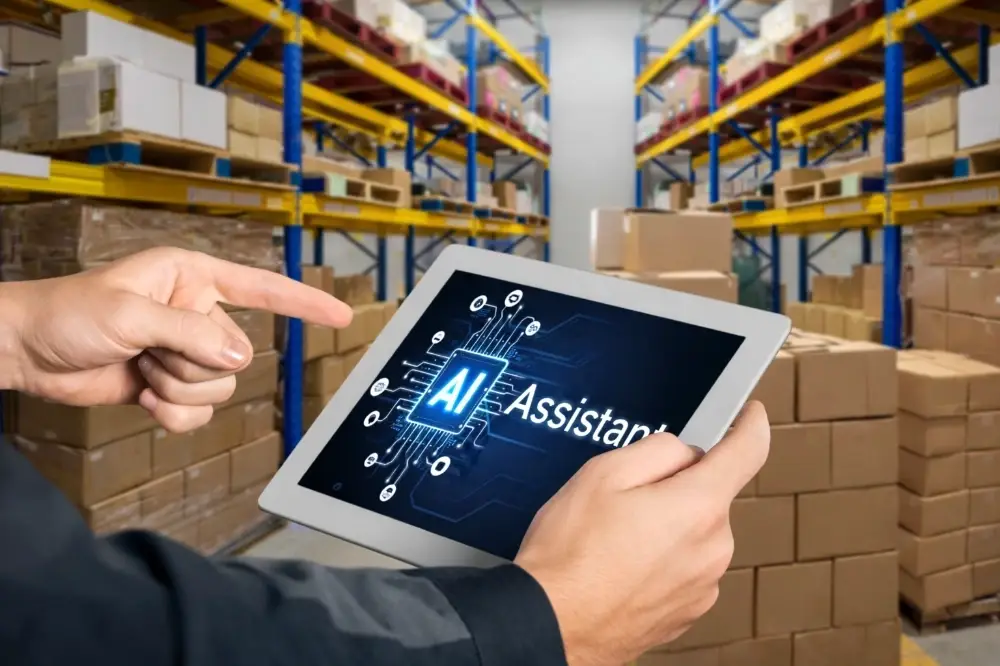

What is AI-powered demand forecasting for warehouses?
AI-powered demand forecasting for warehouses uses machine learning models to analyze historical sales data, real-time inventory signals, and external market factors to predict future product demand with higher accuracy, helping vendors reduce stockouts, minimize excess inventory, and improve overall warehouse efficiency.
Most warehouse inefficiencies do not come from a lack of demand. They come from misjudging it. In real-world operations, vendors consistently struggle with:
- Sudden and unpredictable demand spikes
- Seasonal fluctuations across SKU portfolios
- SKU-level variability that static models cannot capture
Traditional forecasting methods cannot keep pace with this level of operational complexity. Demand forecasting ai agent development changes that by transforming inventory planning from a static, periodic exercise into a dynamic, continuously learning system.
Why do traditional warehouse forecasting methods fail today?
Traditional demand forecasting relies on historical averages and static assumptions. While this approach worked in stable supply chain environments, modern warehousing operations demand a level of agility that rule-based systems simply cannot deliver.
Traditional forecasting fails because it cannot adapt to real-time market changes, complex multi-variable demand patterns, or external disruptions such as supplier delays, macroeconomic shifts, or sudden consumer behavior changes.
In practice, this leads to three recurring problems:
- Overstocking of slow-moving items, increasing carrying costs and tying up working capital
- Stockouts of high-demand SKUs, resulting in lost revenue and reduced fill rates
- Persistent misalignment between supply planning and actual demand
According to recent supply chain research, global retail inventory distortion, the combined financial impact of overstocking and stockouts, amounts to approximately $1.73 trillion annually. AI-powered warehouse forecasting directly addresses this gap by continuously recalibrating predictions as new data becomes available.
Stop overstocking and stockouts, modernize your forecasting today.
How does AI-powered demand forecasting work in warehouses?
AI demand forecasting works by combining historical order data, real-time inventory inputs, and predictive machine learning models to generate accurate SKU-level demand predictions and automated replenishment recommendations.
Unlike traditional models that analyze data sources in isolation, AI systems identify hidden correlations across multiple data streams simultaneously. A demand spike, for example, may not be purely seasonal. It could be driven by a regional promotion, a competitor stockout, or a supply constraint elsewhere in the network.
Core data inputs that power AI warehouse forecasting include:
- Historical sales volumes and order patterns
- Current inventory levels and real-time stock movements
- Supplier lead times, delays, and fulfillment reliability
- External demand signals such as seasonality, promotions, weather patterns, and market trends
What vendors receive from AI forecasting systems goes beyond raw predictions. The output is a set of actionable operational decisions:
- SKU-level demand forecasts at daily, weekly, or monthly intervals
- Dynamic reorder point recommendations tied to real-time stock levels
- Safety stock optimization based on demand variability
- Risk alerts for demand volatility and potential stockout exposure
This shift moves warehouse forecasting from a reporting function to a real-time decision-making engine integrated directly into warehouse management system (WMS) and ERP workflows.
What are the real-world use cases of AI in warehouse demand forecasting?
AI demand forecasting delivers measurable value when applied to specific operational challenges. The following use cases represent where vendors are seeing the most significant impact in 2026.
Reducing stockouts in high-velocity warehouse environments
In fast-moving consumer goods (FMCG) and high-turnover warehouse environments, demand patterns can shift within hours. Traditional forecasting systems are too slow to detect these micro-level changes.
AI models address this by identifying recurring demand spikes before they occur, mapping regional consumption trends at the SKU level, and detecting product substitution behavior when specific items are unavailable. The result is higher fill rates and a measurable reduction in lost-sale events.
Managing seasonal demand variability in e-commerce warehouses
Seasonality remains one of the leading drivers of forecasting error for warehouse vendors. Overstocking during peak periods creates excess dead stock that erodes margins, while underestimating post-peak decline leads to prolonged carrying costs.
AI forecasting solves this by predicting demand peaks with greater precision using multi-year pattern recognition, identifying early signals of demand decline before inventory positions become a liability, and dynamically adjusting replenishment strategies in response to real-time sales velocity.
Optimizing inventory positioning across multi-warehouse networks
For vendors operating across multiple regional distribution centers, demand imbalances between locations are a persistent and costly problem. AI enables intelligent stock redistribution by generating location-specific demand forecasts, identifying transfer opportunities before stockout risk materializes, and reducing unnecessary inter-warehouse transfer costs.
AI does not just predict demand. It optimizes how inventory is positioned across the entire fulfillment network in real time.
What are the key benefits of AI-powered demand forecasting for warehouse vendors?
AI-powered demand forecasting improves forecast accuracy, reduces inventory carrying costs, increases warehouse space utilization, and enables faster operational response to demand volatility.
The business impact extends beyond incremental efficiency gains. These benefits directly affect profitability, working capital, and customer service levels.
Key advantages include:
- Improved forecast accuracy: Machine learning ensemble models achieve 8 to 15% Mean Absolute Percentage Error (MAPE), a significant improvement over traditional statistical methods
- Lower inventory carrying costs: Maintaining optimal stock levels eliminates excess storage expenses and reduces working capital requirements
- Better warehouse space utilization: Inventory is aligned with real demand patterns rather than static planning assumptions
- Higher service levels and fill rates: Products are available when and where customers need them
- Faster response to demand volatility: AI systems recalibrate forecasts in near real time as new signals emerge
Even a modest improvement in forecast accuracy can produce compounding cost savings at scale, particularly for vendors managing large and complex SKU portfolios.
Ready to optimize your warehouse demand forecasting with AI?
How can vendors implement AI demand forecasting effectively?
Vendors can implement AI demand forecasting effectively by preparing data infrastructure, identifying high-impact use cases, running controlled pilots, and integrating AI outputs into existing WMS and ERP systems.
A structured implementation approach is critical. Attempting full-scale deployment without a phased rollout is one of the most common causes of failed AI forecasting initiatives.
A practical 6-step implementation framework:
1. Assess data readiness
Ensure that historical sales data, inventory records, and supplier data are clean, consistent, and accessible. Poor data quality will undermine even the most sophisticated AI models.
2. Focus on high-impact SKUs
Start with products that drive the most revenue, have the highest demand variability, or create the greatest operational risk when misforecast.
3. Select the right solution
Evaluate whether to build custom machine learning models tailored to your warehouse environment or deploy an existing AI forecasting platform with WMS and ERP integration capabilities.
4. Run a pilot program
Test AI forecasting in a controlled environment with defined success metrics before scaling across the full SKU portfolio.
5. Integrate with existing systems
Seamless, real-time integration with WMS, ERP, and order management systems is essential for translating AI forecasts into operational decisions without manual intervention.
6. Continuously optimize models
AI forecasting improves over time, but only when models are continuously trained on fresh data and monitored for drift or accuracy degradation.
Implementation readiness checklist:
- Data pipeline connectivity and quality validation
- Stakeholder alignment across operations, finance, and procurement
- Clear KPIs and success metrics defined before pilot launch
- Defined pilot scope with measurable baseline for comparison
What challenges do vendors face when adopting AI demand forecasting?
The most significant challenges in adopting AI demand forecasting include poor data quality, system integration complexity, internal resistance to change, and lack of model transparency.
Adopting AI forecasting is not purely a technology decision. It is an operational transformation that requires process change, stakeholder buy-in, and a clear governance framework.
Common challenges and practical solutions:
Data quality issues:
Incomplete, inconsistent, or siloed data limits model accuracy. Solution: Invest in data cleansing, governance frameworks, and pipeline standardization before model deployment.
Resistance to change:
Operations and planning teams trust familiar legacy systems over new AI outputs. Solution: Demonstrate early wins through tightly scoped pilots. Show measurable improvements in forecast accuracy and stockout reduction before expanding.
Integration complexity:
Disconnected WMS, ERP, and procurement systems create data gaps that weaken forecasts. Solution: Prioritize API-first AI platforms designed for enterprise system integration.
Lack of model transparency:
Black-box AI decisions are difficult for teams to interpret, trust, or act on. Solution: Implement explainable AI approaches that surface the factors driving each forecast recommendation, enabling teams to validate and override outputs with confidence.
Most AI forecasting failures trace back to execution gaps in data readiness and change management, not to limitations in the underlying technology.
How do you measure ROI from AI demand forecasting?
ROI from AI demand forecasting is measured through improvements in forecast accuracy, reductions in inventory carrying costs, higher inventory turnover ratios, and decreased stockout frequency.
To build a business case for AI forecasting investment, vendors need metrics tied directly to financial and operational outcomes.
Key performance indicators (KPIs) to track:
- Forecast accuracy improvement measured by MAPE reduction
- Inventory turnover ratio before and after AI implementation
- Stockout frequency and associated lost revenue
- Carrying cost reduction as a percentage of total inventory value
- Order fulfillment rate and customer service level improvement
The financial logic is compounding. When forecast accuracy improves, excess inventory decreases, which reduces storage costs and frees up working capital. At the same time, improved stock availability reduces revenue loss from unfulfilled demand. These gains reinforce each other and grow in proportion to SKU portfolio size and warehouse network complexity.
What is the future of AI in warehouse demand forecasting?
The future of AI in warehouse demand forecasting is moving from predictive systems that generate recommendations to autonomous systems that execute inventory decisions in real time, with minimal human intervention.
Emerging capabilities redefining the space include:
- Real-time demand sensing that processes live signals from point-of-sale, IoT sensors, and external market data simultaneously
- AI agents that manage replenishment decisions end to end, from forecast generation to purchase order creation
- Full integration with smart warehouse infrastructure, including robotics and automated storage and retrieval systems (AS/RS)
- Autonomous supply chain orchestration that adjusts inventory positioning across the entire network dynamically
The strategic shift for vendors is moving from forecasting demand to actively orchestrating supply in response to real-time demand signals.
Final Thoughts: Why AI Demand Forecasting is a Strategic Priority for Warehouse Vendors
AI-powered demand forecasting is no longer an optional capability for warehouse vendors. It is a foundational requirement for competing effectively in 2026 and beyond.
Vendors who invest in AI forecasting gain the ability to reduce operational risk, improve inventory efficiency, and scale their warehouse operations with confidence. Vendors who delay will continue absorbing the avoidable costs of stockouts, overstock, and reactive planning cycles that erode margins at scale.
The technology is proven, the implementation frameworks are established, and the ROI case is measurable. The question is not whether to adopt AI demand forecasting. It is how quickly you can build the data infrastructure and operational readiness to do it effectively.
Ready to modernize your warehouse forecasting? Book a free consultation with our AI specialists and get a tailored assessment of your current forecasting maturity, data readiness, and the highest-impact opportunities for your operation.



 Contact us
