
Enterprise AI agents do not operate in a static environment. The information they rely on changes continuously as organizations update policies, introduce new products, revise operating procedures, modify applications, and respond to new regulatory requirements.
An AI agent that produced accurate answers when it entered production can therefore become less reliable over time even when the underlying model has not changed. The agent may continue responding quickly, calling the correct APIs, and passing basic infrastructure checks while retrieving outdated information or following business rules that are no longer valid.
This is why knowledge base drift detection and AI agent calibration are becoming important parts of operating enterprise AI in production. Organizations need to know not only whether an AI agent is available, but whether its knowledge remains current, its retrieval remains accurate, and its behavior continues to align with the business processes it was designed to support.
What Is Knowledge Base Drift in AI Agents?
Knowledge base drift occurs when the information available to an AI agent development gradually becomes misaligned with the current state of the business or the environment in which the agent operates.
Consider a customer service agent connected to an enterprise knowledge base containing product documentation, pricing information, service policies, warranty conditions, and troubleshooting procedures. At deployment, the information may be complete and current. Over the following months, however, the organization might launch new products, change pricing, revise warranty policies, and update troubleshooting procedures.
If these changes are not properly reflected in the knowledge sources available to the agent, it can continue answering questions using outdated information.
The problem becomes more complex with retrieval-augmented generation, or RAG. Updating the original document does not always mean the AI agent immediately begins using the new information. Changes may need to flow through document ingestion, chunking, embeddings, indexes, metadata, retrieval logic, and evaluation before the agent reliably retrieves the latest version.
This creates an important distinction for enterprise AI teams: system availability does not necessarily indicate agent reliability.
Why Knowledge Base Drift Happens in Production AI Systems
Knowledge drift is not always evidence of a poorly designed AI agent. In many enterprise environments, it is a natural consequence of continuous business change.
Policies and procedures are revised. Product specifications change. New documents enter repositories while older versions remain available. Customer behavior evolves. Regulations change. Enterprise applications are upgraded. New APIs become available. Employees begin asking questions that were uncommon when the agent was initially evaluated.
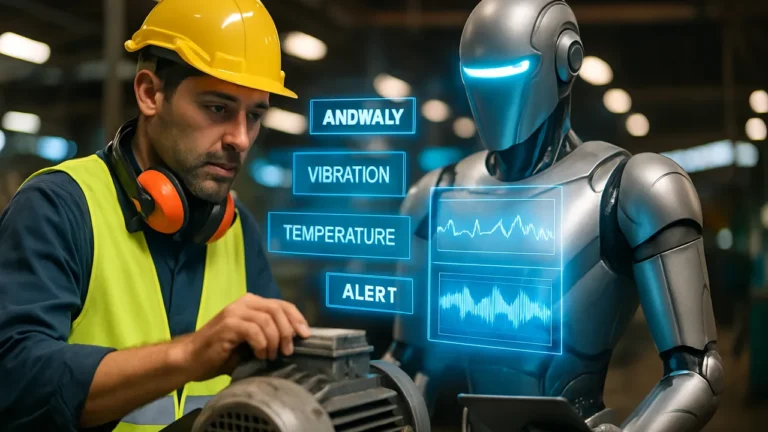
A manufacturing maintenance agent, for example, may have been built using equipment manuals and maintenance procedures available at the time of deployment. If the manufacturer later installs a newer machine configuration and updates the maintenance procedure, the agent’s existing retrieval index may still prioritize the older documentation.
The same problem can occur in financial services. A lending agent may retrieve eligibility requirements and prepare information for an underwriter. If lending policies change but the agent continues retrieving an older policy, its recommendations can become inconsistent with the institution’s current requirements.
The model itself may still be functioning correctly. What changed was the environment surrounding it.
That is why production AI monitoring must account for changes in both the agent and the enterprise knowledge it depends on.
How Knowledge Base Drift Affects RAG-Based AI Agents
RAG has become a common architecture for enterprise AI because it allows agents to retrieve information from organizational knowledge sources instead of relying exclusively on information learned during model training.
However, RAG introduces additional layers that need to remain synchronized.
A typical enterprise RAG system may retrieve information from document repositories, databases, product catalogs, policy libraries, support documentation, CRM records, operational systems, and other knowledge sources. That information is processed, embedded, indexed, retrieved, and provided to the model as context. Organizations building this foundation can follow a structured guide on how to build an enterprise knowledge base for AI agents using approved business documents, metadata, permission-aware retrieval, source citations, and evaluation controls.
Drift can occur at several points in this process.
The source information itself may become stale. Updated documents may not be reindexed correctly. Older documents may remain available alongside current versions. Changes to an embedding model may alter which documents are considered semantically relevant. New user questions may also cause the retrieval system to surface documents that were rarely encountered during initial testing.
The result is retrieval drift, where the information selected for an agent gradually differs from the information it should ideally use.
For example, a customer might ask an AI agent about the company’s current return policy. The correct policy exists in the knowledge repository, but an older policy document may appear higher in retrieval results. The agent can then generate a well-written and apparently confident response that is grounded in the wrong document.
This is why RAG monitoring should evaluate more than whether retrieval succeeds. It should evaluate whether the right information is being retrieved at the right time.
How Can Enterprises Detect Knowledge Base Drift?
Detecting knowledge base drift requires monitoring the quality of information moving through the AI agent rather than relying solely on conventional application monitoring.
Knowledge freshness is one useful signal. Organizations can monitor when frequently retrieved documents were published, modified, ingested, indexed, and last validated. A growing proportion of outdated documents appearing in agent context may indicate that the retrieval environment is becoming stale.
However, document age alone is not enough. A five-year-old equipment manual could still be completely valid, while yesterday’s financial or regulatory information might already require an update. Freshness thresholds therefore need to reflect the business context.
Retrieval quality is another important signal. Teams can evaluate whether similar questions continue retrieving the expected sources, whether relevant documents are appearing high enough in the results, and whether archived or superseded documents are becoming more prominent.
Organizations should also monitor groundedness and faithfulness. An AI agent may retrieve accurate information but still generate an answer that is not sufficiently supported by that information. Tracking whether responses remain grounded in retrieved enterprise evidence can reveal degradation that infrastructure metrics would never detect.
Another important signal is contradiction. Enterprise repositories frequently contain multiple versions of policies, manuals, procedures, and product documentation. If the retrieval system begins returning conflicting sources for the same question, the problem may lie in the knowledge-management process rather than the language model itself.
Together, these signals provide a much more realistic picture of whether an enterprise AI agent remains aligned with its knowledge environment.
Knowledge Drift Can Also Become Behavioral Drift
For AI agents, monitoring information quality is only part of the challenge. Agents can also experience behavioral drift.
Consider a procurement agent designed to retrieve purchasing policies, validate a request, check spending limits, obtain approval when required, and then execute an authorized transaction.
The intended workflow may require human approval for purchases above a particular threshold. If the business changes that threshold but the agent’s instructions or workflow logic are not recalibrated, it could continue following the old process even when it retrieves the latest information.
This is different from a simple knowledge problem.
The agent may know the new rule but still behave according to an outdated decision process.
Production monitoring should therefore consider how agents use tools, when they escalate tasks, which approval paths they follow, whether their decisions remain within their authority, and whether the overall workflow continues producing the expected business outcome.
This distinction becomes increasingly important as organizations move from conversational assistants that primarily generate answers to autonomous or semi-autonomous agents capable of taking actions.
What Is AI Agent Calibration?
AI agent calibration is the process of adjusting an agent so that its knowledge, retrieval behavior, confidence, instructions, decisions, and actions remain aligned with current business requirements.
Calibration should not be treated as simply rewriting a system prompt.
Depending on the cause of drift, recalibration might involve refreshing the knowledge base, removing outdated sources, regenerating embeddings, changing retrieval parameters, modifying instructions, adjusting confidence thresholds, updating escalation rules, changing tool permissions, or modifying the workflow itself.
Suppose an AI agent begins retrieving outdated product documentation. The first step may be to correct the knowledge source and rebuild the relevant index. But the organization should then evaluate whether the updated retrieval behavior produces the expected answers across existing test scenarios.
Similarly, if an agent begins escalating too many routine requests to employees, the problem may not require any knowledge-base changes. Instead, the agent’s confidence thresholds or decision rules may need recalibration.
This is why drift detection and calibration should operate together. Drift identifies that something has changed. Calibration determines how the agent should be adjusted in response.
Knowledge Base Refresh and AI Agent Calibration Are Not the Same
A common mistake is assuming that updating the knowledge base automatically fixes the AI agent.
A knowledge-base refresh primarily changes the information available to the system. It may involve replacing outdated documents, adding new information, updating metadata, regenerating embeddings, or rebuilding an index.
Agent calibration focuses on how the AI behaves after receiving that information.
For example, a bank could update its lending policy in the knowledge repository. The AI agent might correctly retrieve the new policy but still apply an outdated escalation threshold because that threshold remains embedded in its workflow instructions.
The knowledge is now correct, but the agent is still misaligned.
For this reason, every meaningful knowledge-base update should be followed by appropriate evaluation. Organizations should test whether the agent retrieves the correct information, interprets it accurately, applies the right business rules, escalates appropriately, and produces the intended outcome.
How Should AI Agent Calibration Be Measured?
Enterprise teams should avoid relying on one overall accuracy score.
An AI agent participates in multiple stages of a workflow, and each stage can degrade independently.
Retrieval relevance can reveal whether the agent is finding appropriate information. Context precision and recall can show whether the retrieved information is useful and sufficiently complete. Groundedness can indicate whether the response is supported by enterprise evidence. Task-success measurements can determine whether the agent ultimately completed the business workflow correctly.
Confidence calibration also matters. An agent that is uncertain about an unfamiliar situation should behave differently from an agent that has strong supporting evidence.
For lower-risk customer interactions, moderate confidence might trigger additional retrieval or clarification. For a high-risk financial or operational decision, the organization may require human authorization regardless of how confident the agent appears.
The metrics used should therefore reflect the risk and responsibility of the agent, rather than applying the same monitoring standard to every enterprise AI application.
How Often Should AI Agents Be Recalibrated?
There is no universal recalibration schedule that works for every AI agent.
A better approach is to combine continuous monitoring with event-driven and risk-based evaluation.
When an important policy changes, the relevant knowledge and agent behavior should be reevaluated. When a company launches a new product, queries associated with that product should be added to the evaluation set. When an embedding model changes, retrieval quality should be compared against the previous version. When a new API or enterprise tool is introduced, the agent’s tool-use behavior should be tested before production authority is expanded.
High-risk failures should trigger immediate investigation.
For example, if a financial-services agent produces an incorrect recommendation in a regulated workflow, the organization may temporarily require human review for similar cases while the root cause is investigated.
The right recalibration frequency therefore depends on two questions: How quickly does the agent’s environment change, and what happens if the agent gets something wrong?
Can Knowledge Base Drift Increase AI Hallucinations?
Knowledge base drift can contribute to hallucinations, although the two problems are not identical.
If an AI agent retrieves outdated, incomplete, or contradictory information, the model has a weaker foundation for generating an accurate response. It may combine conflicting sources, infer missing information, or produce an answer that sounds reasonable but is inconsistent with current enterprise knowledge.
This is why hallucination monitoring should not focus only on the language model.
When an inaccurate response occurs, teams should investigate the complete chain. Was the correct information available? Was it indexed? Did the retrieval system find it? Was outdated information also retrieved? Did the model remain faithful to the retrieved context? Did the agent apply the correct business rules?
This type of root-cause analysis is far more useful than simply labeling the output a hallucination.
What Happens When an AI Agent Drifts?
Not every drift signal requires an AI agent to be taken offline.
The response should depend on severity and business risk.
Minor retrieval degradation might trigger investigation and knowledge refresh while the agent continues operating normally. More significant drift could require additional validation before an agent completes certain tasks.
For higher-risk situations, organizations can temporarily reduce the agent’s authority and route decisions through human reviewers while the problem is investigated.
This creates a more flexible operating model in which agent autonomy depends partly on demonstrated reliability.
An agent operating within established performance thresholds may receive its normal level of authority. When reliability begins declining, additional validation or human approval can be introduced. If a critical problem appears, execution authority can be suspended until the agent has been corrected and reevaluated.
This approach becomes increasingly important as AI agents gain access to enterprise systems and move from recommending actions to executing them.
Knowledge Base Drift Becomes More Complex With Multi-Agent Systems
Knowledge drift becomes even more difficult when several AI agents collaborate on the same workflow.
Consider a financial-services process involving a customer agent, knowledge agent, compliance agent, and transaction agent.
The customer agent may collect information. The knowledge agent retrieves the relevant policy. The compliance agent evaluates requirements. The transaction agent prepares an approved action.
If the knowledge agent begins retrieving an outdated policy, that error can propagate to every downstream agent.
Each component may appear technically healthy while the overall workflow produces the wrong outcome.
Multi-agent environments therefore require monitoring at more than the individual-agent level. Organizations need to understand whether agents are exchanging the correct information, whether handoffs remain reliable, whether shared context is accurate, and whether the complete workflow produces the intended business outcome.
As agentic systems become more interconnected, workflow-level drift may become just as important as model-level or knowledge-level drift.
From Knowledge Drift Detection to Continuous AgentOps
Knowledge base drift demonstrates why production AI agents need continuous operational management.
Deploying an agent is only the beginning. After deployment, business information changes, user behavior evolves, connected systems are modified, models are upgraded, new tools become available, and organizational policies continue to change.
AgentOps provides a framework for managing this ongoing lifecycle.
Rather than evaluating an AI agent only before production, enterprises can continuously observe how it retrieves information, generates responses, uses tools, makes decisions, escalates tasks, and completes workflows.
When meaningful drift appears, teams can identify the root cause, recalibrate the appropriate layer, run regression evaluations, validate the change, and return the agent to normal operation.
The lifecycle becomes continuous: observe, detect, evaluate, recalibrate, validate, govern, and optimize.
This is particularly important for autonomous agents because the consequences of drift increase with the authority given to the AI system. An outdated knowledge assistant may provide an incorrect answer. An outdated autonomous agent could execute an incorrect business action.
How Intellectyx Helps Enterprises Manage AI Agents in Production
Intellectyx helps enterprises move beyond initial AI agent deployment by establishing the monitoring, evaluation, governance, and AgentOps practices required for production environments.
For RAG-based agents, this can include evaluating knowledge freshness, retrieval quality, groundedness, source reliability, and changes in enterprise information. For workflow agents, monitoring can extend to tool usage, decision paths, escalation behavior, task completion, and human intervention.
When degradation is detected, the objective is not simply to update the AI model. The underlying cause may exist in the knowledge source, retrieval architecture, instructions, connected application, workflow logic, or agent permissions.
By connecting monitoring with continuous evaluation and recalibration, organizations can maintain AI agents as their business environment changes rather than assuming that an agent that worked at deployment will remain reliable indefinitely.
Conclusion
Knowledge base drift is becoming an important production challenge as enterprises deploy AI agents across customer service, financial services, manufacturing, operations, knowledge management, and other business functions.
The underlying issue is straightforward: business knowledge changes continuously, while an AI agent can only operate on the information and rules available to it.
Enterprises therefore need to monitor more than uptime and model performance. They need visibility into whether knowledge remains current, retrieval remains relevant, responses remain grounded, confidence remains calibrated, and agent behavior continues to follow the intended business process.
When meaningful drift appears, organizations should identify the source, recalibrate the appropriate part of the system, evaluate the changes, and validate the agent before restoring or expanding its authority.
As enterprise AI moves toward increasingly autonomous agents and multi-agent systems, knowledge base drift detection and AI agent calibration will become a core part of keeping agentic AI reliable in production.
FAQs
Knowledge base drift occurs when the external information an AI agent relies on becomes outdated, incomplete, or misaligned with current business conditions. Model drift refers to changes in a model’s predictive or behavioral performance as production data and conditions change. An enterprise AI system
Yes, AI agents can be designed to flag potentially outdated information by evaluating document versions, metadata, source timestamps, conflicting content, retrieval patterns, and predefined freshness requirements. However, determining whether information is truly obsolete may still require validation against authoritative enterprise sources or human review.
Responsibility should typically be shared between AI or technology teams and the business owners responsible for the underlying knowledge. Technical teams can manage ingestion, indexing, monitoring, and evaluation, while domain owners validate whether policies, procedures, product information, and other business knowledge remain authoritative.
Not necessarily. Some organizations need historical documents for regulatory, audit, or operational purposes. Instead of deleting them, outdated documents can be archived, versioned, tagged with effective dates, and excluded from current retrieval when appropriate. This preserves historical records while reducing the risk of an agent using obsolete information.
Enterprises can maintain evaluation datasets containing representative questions, expected sources, business scenarios, edge cases, and expected outcomes. After a knowledge update, these tests can be rerun to determine whether retrieval quality and agent performance have improved without introducing regressions elsewhere.