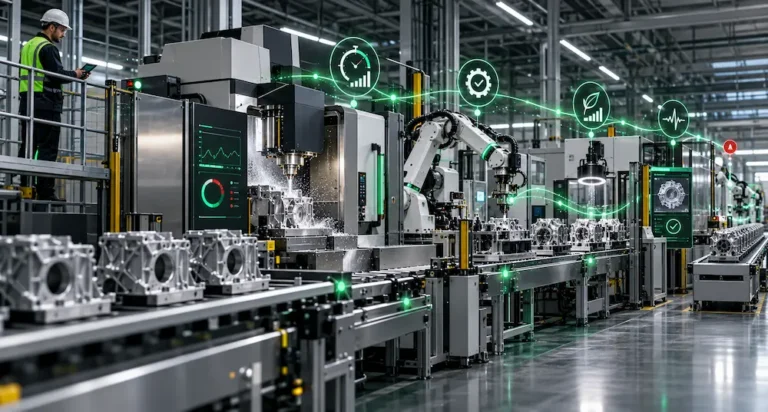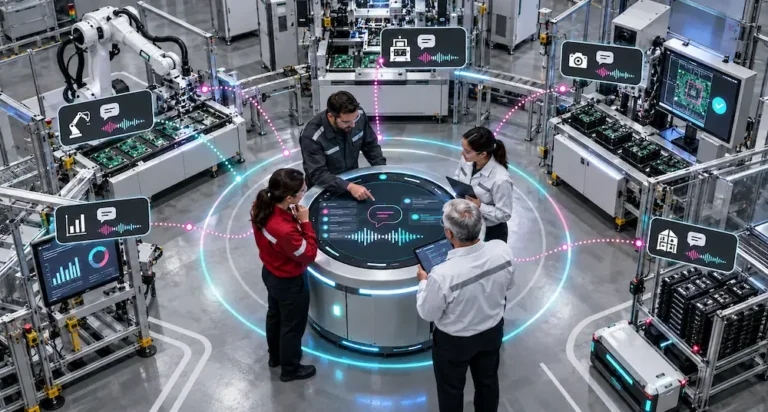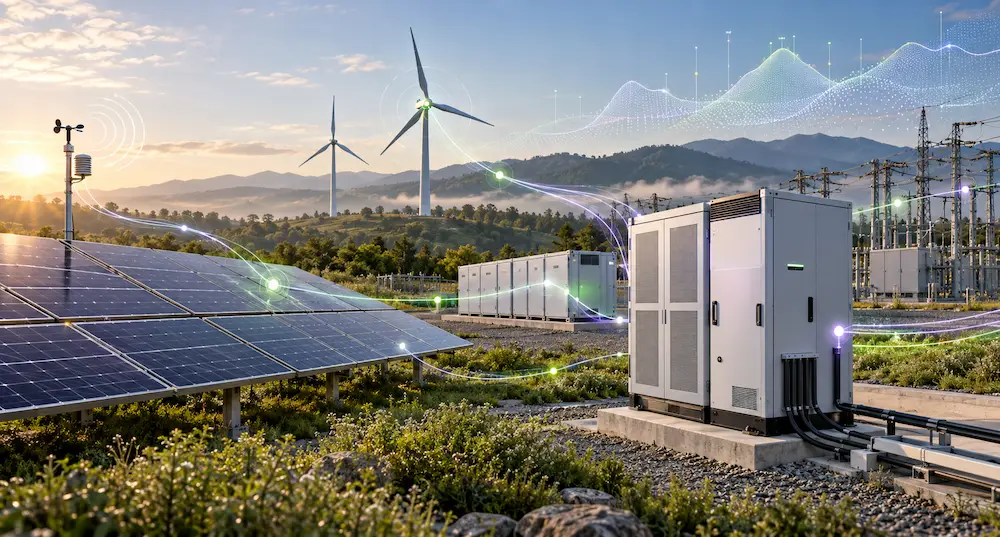

Renewable-energy companies collect enormous volumes of information from weather services, solar inverters, wind turbines, batteries, smart meters, grid systems, and maintenance platforms. The real challenge is converting this fragmented data into timely, reliable operational decisions.
Solar and wind production changes with weather. Power-electronic equipment must respond to fluctuating generation and grid conditions. Assets are distributed across large geographic areas, while equipment failures can reduce generation with little warning.
AI for power electronics and renewable energy systems can help connect these signals. It can forecast generation, detect abnormal equipment behavior, optimize storage decisions, prioritize alarms, and prepare maintenance actions. However, AI should support qualified engineers and operators rather than replace protection systems, deterministic controls, or professional judgment.
Organizations evaluating a renewable-energy AI opportunity can explore Intellectyx’s AI solutions for energy and utilities across forecasting, asset management, field operations, and intelligent automation.
What Is AI for Power Electronics and Renewable Energy Systems?
Artificial intelligence for renewable energy systems refers to the use of machine learning, optimization, computer vision, generative AI, and AI agents to analyze energy data and support operational decisions.
Different AI capabilities serve different purposes:
- Predictive AI estimates generation, demand, equipment condition, and failure risk.
- Optimization models evaluate possible actions within engineering, market, storage, and operational constraints.
- Computer vision analyzes drone, thermal, and inspection images.
- Generative AI retrieves procedures, summarizes operating information, and prepares reports.
- AI agents coordinate multi-step activities across operational and enterprise systems.
The distinction matters. A forecasting model predicts an outcome. An optimization system recommends a response. An AI agent may gather information, prepare an action, and escalate it for approval. A control system executes approved commands within engineered limits.
Where AI Fits in Power Electronics
Power electronics connect renewable generation, storage, loads, and the electrical grid. Inverters, converters, rectifiers, battery-management systems, and microgrid controllers continuously manage electrical energy.
AI can analyze telemetry from this equipment to identify patterns associated with declining conversion efficiency, overheating, voltage instability, unusual switching behavior, harmonic distortion, or component degradation.
For an inverter fleet, a model might compare each unit with similar equipment operating under comparable irradiance and temperature conditions. If one inverter consistently produces less power or operates at a higher temperature, the system can flag it for investigation.
AI can also support battery management by improving state-of-charge and state-of-health estimates, identifying abnormal thermal behavior, and evaluating charging or discharging options.
Safety-critical protection must remain with validated control logic, relays, interlocks, and engineering-approved boundaries.
How AI Improves Renewable Energy Forecasting
AI in renewable energy forecasting combines historical generation with weather, equipment availability, location, and current operating conditions.
For solar generation, useful inputs can include irradiance, cloud cover, temperature, humidity, satellite imagery, panel orientation, inverter availability, and historical output.
Wind forecasts may incorporate wind speed, direction, atmospheric pressure, turbine power curves, wake effects, operating state, and previous generation.
The required model depends on the decision. A near-real-time forecast can help manage operational deviations, while a day-ahead forecast can support scheduling, storage, and market commitments.
Forecasts should communicate uncertainty. A predicted range with confidence information is generally more useful than a single number that appears certain. AI can estimate likely conditions, but unexpected weather, equipment failures, curtailment, and grid events can still change the outcome.
Illustrative use case: Solar portfolio forecasting
A solar operator combines weather forecasts, site-level generation, inverter availability, and scheduled maintenance. The model identifies that expected output is below the commercial forecast because cloud cover is increasing while several inverters are unavailable.
The operations team reviews the explanation and adjusts storage and market plans. AI does not make the commercial commitment independently. It gives the team earlier and better-organized evidence.
The Department of Energy identifies renewable-generation forecasting as an important AI opportunity for grid operators.
How AI Supports Renewable Energy Integration
Renewable-energy integration requires more than predicting solar or wind production. Operators must connect expected generation with storage, grid demand, flexible loads, market conditions, and network constraints.
AI can help coordinate:
- Solar and wind generation
- Battery energy storage
- Electric vehicle charging
- Distributed energy resources
- Microgrids
- Demand-response programs
- Flexible industrial loads
For example, an optimization model can evaluate whether surplus renewable energy should charge a battery, serve a flexible load, support a grid service, or be sold. The recommendation must account for battery limits, expected demand, price signals, reserve requirements, and equipment constraints.
AI can also help identify where grid capacity may be available, forecast when it can be used, and prioritize feasible responses to congestion.
AI Automation for Renewable Energy Operations
AI automation for renewable energy operations connects model outputs with practical work.
An AI-enabled operations workflow could:
- Group related alarms and reduce duplicates
- Add asset history and operating context to alerts
- Analyze drone or thermal inspection images
- Retrieve troubleshooting procedures
- Prepare maintenance work orders
- Draft generation and compliance reports
- Recommend dispatch options
- Escalate exceptions to authorized employees
Consider an inverter alarm. Instead of forwarding the raw alert, an AI agent could retrieve recent temperature and output data, compare the inverter with peer equipment, check previous maintenance events, locate the approved procedure, and prepare a work-order draft.
The technician receives a better-prepared case but remains responsible for verifying the issue and approving the response.
If your organization is manually connecting SCADA alerts, weather feeds, equipment histories, and maintenance systems, custom AI solution development can help turn those disconnected activities into a governed workflow.
Predictive Maintenance for Renewable Energy Assets
AI predictive maintenance for renewable energy analyzes equipment condition, operating context, maintenance history, and failure patterns to identify developing problems.
Potential assets include:
- Wind-turbine gearboxes and bearings
- Generators
- Solar inverters
- Transformers
- Battery-storage systems
- Tracking equipment
- Cooling systems
- Transmission components
Models may use vibration, temperature, acoustic signals, oil condition, voltage, current, fault codes, weather conditions, and maintenance records.
Illustrative use case: Wind-turbine gearbox risk
A wind operator detects a gradual increase in vibration and temperature for one gearbox. The readings remain below fixed alarm thresholds, but the pattern differs from comparable turbines under similar loads.
The model raises the asset’s risk level and shows the signals influencing its assessment. A reliability engineer reviews the evidence and schedules an inspection during a planned service window.
AI should not claim that the gearbox will fail on an exact date unless the model has been validated for that prediction. Its immediate value is helping engineers identify which asset deserves attention first.
For a deeper implementation discussion, see AI-driven predictive maintenance for industrial equipment.
Benefits of AI in Renewable Energy
The potential AI benefits in renewable energy include:
- More reliable generation forecasts
- Earlier detection of equipment risk
- Better coordination of generation and storage
- Faster investigation of operational exceptions
- Improved prioritization of maintenance resources
- Reduced manual analysis
- Better access to technical knowledge
- More consistent operational reporting
These benefits are not automatic. A more accurate model will not improve operations if employees receive its output too late, cannot understand it, or lack the authority and resources to respond.
Data and Architecture Requirements
A renewable-energy AI solution may need data from SCADA, weather services, smart meters, inverter telemetry, battery-management systems, sensors, CMMS or EAM platforms, GIS, market systems, and inspection imagery.
A practical architecture includes:
- Operational and external data sources
- Secure data ingestion
- Time-series and historical storage
- Data-quality and asset-contextualization services
- Predictive or optimization models
- An application, dashboard, or AI agent
- Human approval and escalation controls
- Evaluation, monitoring, and audit logs
Deployment may be at the edge, in the cloud, or hybrid. Edge systems can support low-latency analysis where connectivity is limited. Cloud platforms can support portfolio-wide training and analysis. Hybrid designs combine local responsiveness with centralized intelligence.
Common Implementation Challenges
Renewable-energy AI projects commonly encounter:
- Missing or inconsistent sensor data
- Misaligned timestamps
- Inconsistent asset identifiers
- Limited failure examples
- Legacy-system integration
- Model drift
- Excessive false alarms
- Cybersecurity requirements
- Limited explanation of recommendations
- Unclear human accountability
A model trained on one turbine type, location, or season may not perform equally well across every asset. Models must be evaluated by asset class and operating condition before expansion.
The POWER Framework for Piloting Renewable Energy AI
Use the POWER framework to keep the pilot focused:
Pick one operational decision
Select a defined problem such as generation forecasting, inverter anomaly detection, battery scheduling, or maintenance prioritization.
Organize the required data
Identify the systems, data owners, historical coverage, quality issues, and integration requirements.
Work in advisory mode
Run the model in shadow mode without changing operations. Compare its recommendations with actual outcomes and expert judgment.
Establish controls and measurements
Define performance thresholds, engineering limits, approval points, escalation procedures, and success metrics.
Roll out after evidence
Expand to more sites or asset types only after the system demonstrates stable technical and operational performance.
Pilot-readiness checklist
- Is the decision clearly defined?
- Is there a measurable baseline?
- Are the required data sources available?
- Are timestamps and asset identifiers consistent?
- Has an engineer defined operational constraints?
- Can users understand the model’s output?
- Is a person responsible for approving consequential actions?
- Can the solution run in advisory mode?
- Is ongoing monitoring assigned?
Moving From Prediction to Operational Value
AI for power electronics and renewable energy systems creates value when forecasts, equipment signals, storage decisions, maintenance workflows, and human responsibilities are connected.
Start with one measurable decision. Validate the data and model. Operate in advisory mode. Establish engineering boundaries and human approval. Scale only after the system proves that employees can use its output reliably.
Intellectyx helps energy and utility organizations design, build, integrate, and operate AI solutions for forecasting, asset health, grid operations, field service, and workflow automation. Connect with our AI experts to evaluate a high-value renewable-energy use case.
Ready to Apply AI Across Your Renewable Energy Operations?
Connect With Our AI ExpertsFAQs
AI can support bounded automation after appropriate testing, but it should not receive unrestricted control over critical energy infrastructure. Consequential actions require engineering validation, cybersecurity controls, defined operating limits, human approval where necessary, monitoring, audit logs, and reliable fallback procedures.
AI combines historical generation, weather forecasts, satellite imagery, equipment availability, and current operating conditions. It can identify complex patterns and update predictions as conditions change. Results should include uncertainty ranges because weather, equipment failures, and grid events cannot be predicted with complete certainty.
AI can analyze voltage, current, temperature, harmonics, switching behavior, efficiency, and fault data to detect abnormal conditions or recommend operating adjustments. Safety-critical control should remain within validated protection systems, deterministic logic, and engineering-approved operating limits.
Common challenges include incomplete sensor data, inconsistent timestamps, limited failure examples, legacy-system integration, model drift, false alarms, cybersecurity requirements, poor explainability, and unclear accountability. A controlled pilot in advisory mode can help identify and address these risks before wider deployment.
AI analyzes sensor signals, operating conditions, maintenance history, and failure patterns to identify developing equipment risks. It can support condition-based maintenance for wind-turbine gearboxes, bearings, solar inverters, transformers, battery systems, cooling equipment, and other renewable-energy assets.