
Automation in the automotive industry has fundamentally changed how vehicles are designed, built, and delivered — and the transformation is still accelerating. From the moment General Motors introduced Unimate, the world’s first industrial robot, on a production line in 1961, the automotive sector has been at the forefront of manufacturing automation.
Today, U.S. automakers alone purchase approximately 50% of all industrial robots sold globally, according to the International Federation of Robotics (IFR). The global operational stock of industrial robots in automotive recently exceeded one million units — a record high.
This guide covers every major dimension of automotive automation: the core technologies driving factory floors today, the rise of collaborative robots and machine vision, the shift to electric vehicle (EV) production, the integration of AI and Industry 4.0, and how AI Services for Optimizing Automotive Manufacturing Processes are enabling predictive maintenance, quality control, production planning, and self-optimizing factories that define the next generation of manufacturing.
Whether you are a manufacturer evaluating new automation investments or a professional tracking where the industry is headed, this is your comprehensive reference.
What Is Automation in the Automotive Industry?
Automation in the automotive industry refers to the use of robotics, AI, and intelligent systems to perform manufacturing, quality control, and operational processes with minimal human intervention.
However, the definition has evolved significantly.
Then vs Now: The Shift in Automotive Automation
Traditional Automation:
- Fixed robotic assembly lines
- Pre-programmed workflows
- Human-led decision-making
- Limited adaptability
Modern AI-Driven Automation:
- Real-time data-driven systems
- Adaptive production environments
- Autonomous decision-making
- Continuous optimization
This shift is being driven by increasing complexity especially with EV production, global supply chain volatility, and rising customer expectations.
Key Insight: Automation is no longer about efficiency alone it’s about intelligence, adaptability, and speed of decision-making.
What Is Agentic AI in Automotive? (Snippet-Ready Answer)
Agentic AI is a form of artificial intelligence that can independently perceive data, make decisions, take actions, and continuously learn without constant human intervention.
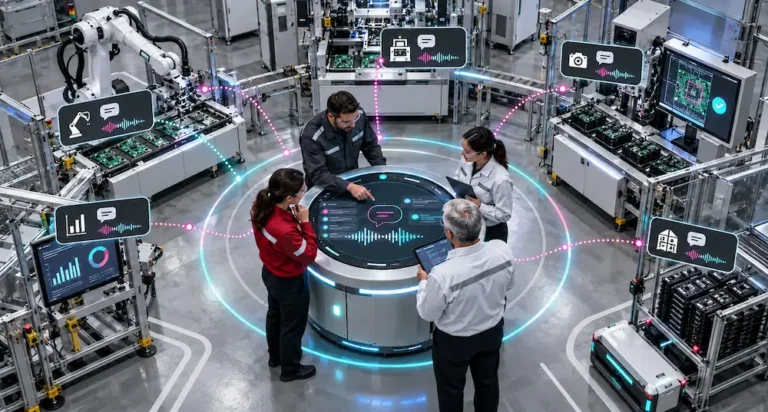
In automotive environments, Agentic AI functions as a real-time operational brain.
Why Agentic AI Is Critical Now
Modern automotive operations generate massive volumes of data from:
- Machines and sensors
- Quality systems
- Supply chains
- Customer demand signals
Traditional systems cannot process and act on this data fast enough. Agentic AI closes this gap by:
- Turning data into real-time decisions
- Acting autonomously across systems
- Continuously improving outcomes
Simple Analogy: If traditional automation is a machine, Agentic AI is the decision-maker controlling the entire factory.
How Is Agentic AI Different from Traditional Automation?
| Feature | Traditional Automation | AI Automation | Agentic AI |
|---|---|---|---|
| Task Execution | Fixed | Adaptive | Autonomous |
| Decision Making | Manual | Assisted | Independent |
| Learning Ability | None | Limited | Continuous |
| System Coordination | Siloed | Partial | End-to-End |
Key Takeaway: Agentic AI doesn’t just automate tasks it connects, decides, and executes across the entire automotive value chain.
Turn Your Factory into a Smart, Self-Optimizing System
Where Is Agentic AI Driving the Biggest Impact in Automotive?
1. How Does Agentic AI Improve Manufacturing Efficiency?
Agentic AI optimizes production lines in real time by identifying inefficiencies, predicting bottlenecks, and dynamically reallocating resources.
What This Looks Like in Practice
- AI monitors production throughput continuously
- Detects slowdowns before they escalate
- Automatically adjusts workflows and resource allocation
Mini Caselet: A plant experiences recurring slowdowns during peak hours. Instead of manual intervention, an AI agent redistributes workloads across stations, improving throughput by double digits without adding new machines. For more practical implementations, explore these real-world AI agent use cases across industries.
Outcome:
- Higher efficiency
- Reduced idle time
- Better utilization of existing assets
Agentic AI is not only transforming manufacturing but also enhancing customer-facing operations like AI agents for automotive customer service.
2. How Does AI Improve Quality Control in Automotive Manufacturing?
AI-powered quality systems shift quality control from reactive inspection to proactive prevention.
How It Works
- Computer vision systems detect defects instantly
- AI models analyze patterns across production stages
- Root causes are identified in real time
- Corrective actions are triggered automatically
Why This Matters
Traditional quality checks happen at the end of production. By then, defects are costly.
With Agentic AI:
- Defects are detected earlier
- Issues are corrected immediately
- Recurrence is prevented
Result:
- Lower rework costs
- Consistent product quality
- Faster production cycles
3. What Is Predictive Maintenance in Automotive AI?
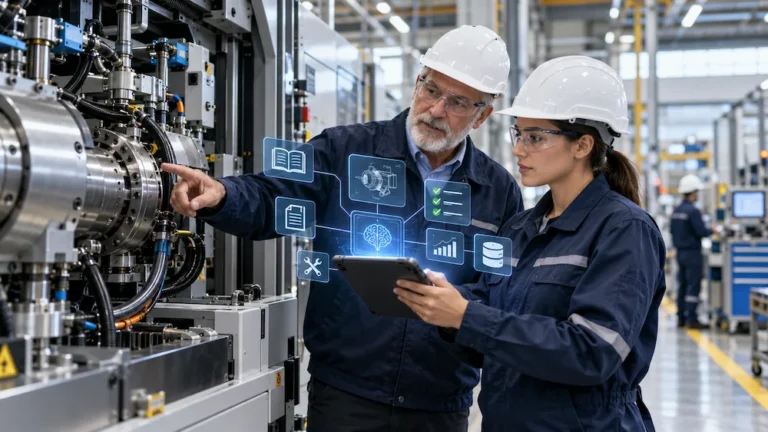
Predictive maintenance uses AI to anticipate equipment failures and take action before breakdowns occur.
Agentic AI Advantage
Unlike traditional systems that only alert:
- AI predicts failures days in advance
- Automatically schedules maintenance
- Adjusts production schedules proactively
Mini Caselet: An AI system detects abnormal vibration in a critical machine. It schedules maintenance during a low-production window and redistributes workload—preventing unplanned downtime.
Outcome:
- Reduced downtime
- Extended equipment lifespan
- Lower maintenance costs
4. How Does Agentic AI Optimize Automotive Supply Chains?
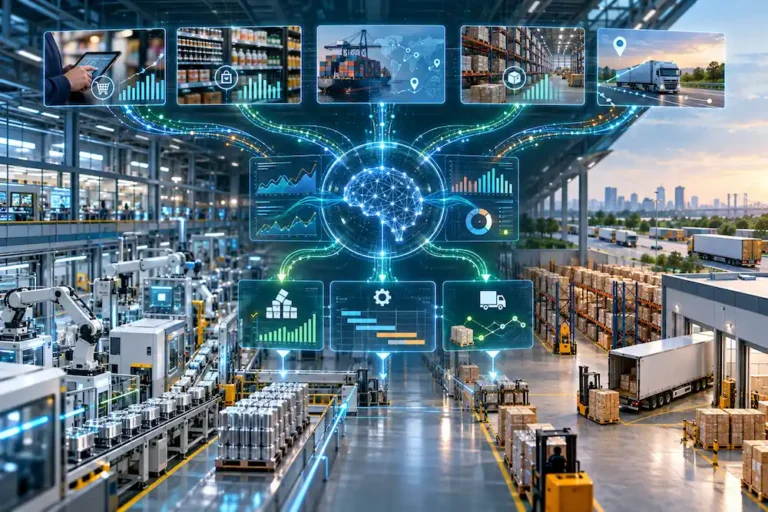
Agentic AI enables real-time, autonomous supply chain decisions based on demand, inventory, and external disruptions. Beyond supply chains, organizations are also deploying AI copilots for dealer and field support to streamline after-sales service and improve dealer network efficiency.
Capabilities
- Real-time demand forecasting
- Inventory optimization
- Dynamic supplier selection
- Risk detection and mitigation
Real Impact
During disruptions (e.g., delays, shortages):
- AI identifies alternative suppliers
- Adjusts procurement strategies
- Maintains production continuity
Result:
- Improved resilience
- Reduced delays
- Optimized inventory costs
Learn more about how agentic AI in supply chain transformation is helping manufacturers build resilient and adaptive operations.
5. How Is Agentic AI Used in EV Manufacturing?
Agentic AI plays a critical role in optimizing EV-specific processes such as battery production, energy usage, and quality consistency.
Key Applications
- Battery assembly optimization
- Thermal management systems
- Energy consumption tracking
- Quality consistency monitoring
Outcome:
- Improved battery performance
- Energy-efficient production
- Reduced variability in output
Beyond manufacturing operations, AI is also transforming how automotive companies engage with drivers and vehicle owners. AI-powered virtual assistant services for the automotive industry enable proactive customer interactions such as service reminders, appointment scheduling, vehicle updates, and personalized support across the ownership journey.
How Does Agentic AI Improve Quality and Reduce Defects?
Agentic AI improves quality by combining real-time detection, root cause analysis, and automated corrective actions into a continuous feedback loop.
Core Mechanisms Explained
1. Real-Time Root Cause Analysis
- Connects machine, process, and supplier data
- Identifies the exact origin of defects instantly
2. Closed-Loop Feedback Systems
- Every defect improves the system
- Learning is continuous and automatic
3. Predictive Quality Intelligence
- Detects patterns before defects occur
- Prevents issues instead of reacting to them
Why This Is a Game-Changer
- Faster detection leads to lower scrap and rework
- Continuous improvement drives long-term efficiency
Key Takeaway: Quality is no longer inspected; it is engineered and optimized in real time.
Your Competitors Are Already Using AI—Are You?
How to Implement Agentic AI in Automotive Operations (Step-by-Step Playbook)
Step 1: Identify High-Impact Use Cases
Start where ROI is clear:
- Quality control
- Downtime reduction
- Supply chain optimization
Step 2: Map Decision Bottlenecks
Ask critical questions:
- Where are decisions delayed?
- Which processes depend heavily on manual approvals?
Step 3: Build a Real-Time Data Foundation
Integrate systems such as:
- IoT sensors
- MES (Manufacturing Execution Systems)
- ERP platforms
A critical part of this journey is automating internal workflows using AI agents to eliminate manual bottlenecks and improve decision speed.
Step 4: Deploy Agentic AI Pilots
- Start with one workflow
- Measure impact
- Validate ROI
Step 5: Scale Across the Enterprise
- Expand across plants
- Enable cross-functional orchestration
- Continuously optimize
Quick Readiness Checklist
- Do you lack real-time visibility?
- Are decisions slow and manual?
- Are systems disconnected?
- Is quality reactive instead of proactive?
If yes, Agentic AI can deliver immediate value.
What Are the Benefits of Automation in the Automotive Industry?
Automation powered by Agentic AI improves efficiency, reduces costs, enhances quality, and enables scalable operations.
Operational Benefits
- Faster production cycles
- Reduced downtime
- Improved plant efficiency
Financial Benefits
- Lower operational costs
- Reduced waste and rework
- Higher ROI
Strategic Benefits
- Faster time-to-market
- Greater resilience
- Competitive advantage
Insight: The real value comes from faster and smarter decision-making not just automation.
What Challenges Do Automotive Companies Face in AI Automation?
Common Challenges
- Data silos and poor integration
- Lack of AI strategy
- Resistance to change
- Skills gap
How to Overcome Them
- Align AI with business outcomes
- Build cross-functional teams
- Start with pilot projects
- Invest in data infrastructure
Takeaway: Success depends more on execution strategy than technology alone.
What Is the Future of Automation in the Automotive Industry?
The future of automation in the automotive industry is autonomous, self-optimizing, and fully AI-driven, where systems continuously learn, make decisions, and act without human intervention.
What to Expect
1. Self-Healing Production Systems
Factories will automatically detect issues, identify root causes, and fix them in real time reducing downtime and ensuring consistent quality.
2. Fully Automated Decision-Making
AI agents will handle critical operational decisions across production, maintenance, and supply chain eliminating delays caused by manual approvals.
3. AI-Driven End-to-End Orchestration
Instead of siloed automation, systems will be connected across the entire value chain, enabling real-time coordination and optimization.
Key Insight (AI Overview Ready)
The industry is shifting from automated factories → autonomous, self-driving enterprises powered by Agentic AI.
Conclusion: Why Automotive Leaders Must Act Now
Automation in the automotive industry is entering a new phase driven by intelligence, autonomy, and real-time decision-making. Agentic AI is enabling organizations to move from reactive processes to self-optimizing operations, delivering better quality, faster execution, and greater resilience.
Organizations that adopt early will:
- Operate more efficiently
- Deliver higher-quality outcomes
- Respond faster to market changes
Those that delay risk falling behind as the industry rapidly shifts toward AI-driven operations.
Ready to take the next step? Connect with our AI experts to identify high-impact use cases and start your Agentic AI journey with confidence.
FAQs
AI improves efficiency, reduces defects, minimizes downtime, and enables faster, smarter decision-making across the entire automotive value chain.
Agentic AI is an advanced form of artificial intelligence that can independently analyze data, make decisions, and execute actions across automotive operations. It acts as a real-time decision engine that optimizes production, quality control, and supply chain workflows without constant human involvement.
AI improves quality control by detecting defects instantly using computer vision, identifying root causes through data analysis, and triggering corrective actions in real time. This reduces rework, prevents recurring issues, and ensures consistent product quality across production lines.
AI adoption can involve high initial costs, data dependency, integration challenges, and skill gaps. However, with the right strategy, these challenges can be minimized and quickly turned into long-term value.
Automotive companies can implement Agentic AI by identifying high-impact use cases, building a strong real-time data foundation, and starting with pilot deployments. Gradually scaling these solutions across operations helps achieve measurable ROI and long-term transformation.