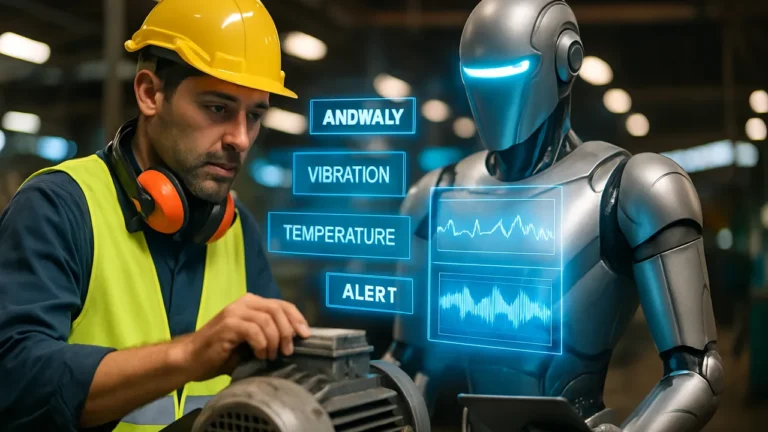

Most companies that deploy autonomous AI agents discover the same hard truth within the first few weeks: a capable large language model is not the same thing as a reliable, production-ready agent. If you want to train autonomous AI agents that plan correctly, use the right tools, and complete real-world tasks without constant human rescue, you need far more than a good prompt you need structured goals, real execution data, tightly scoped feedback loops, and governance that scales with trust. This guide walks through the six best approaches used by high-performing engineering and AgentOps teams to train autonomous AI agents for dependable task execution, plus the practical framework (G.R.O.W.T.H.) and 2026 benchmark data you can use to evaluate your own agent program.
What Does “Training” Mean for Autonomous AI Agents?
Training an autonomous AI agent is fundamentally different from training a traditional machine learning model.
Traditional AI models are trained to produce output predictions, classifications, or text based on static inputs. Autonomous agents, on the other hand, are trained to achieve goals over time. They must reason, choose actions, use tools, observe outcomes, and adapt their behavior.
In practical terms, training autonomous AI agents development means teaching them:
- How to break down goals into executable steps
- How to act within real system constraints
- How to recognize success and failure
- How to improve through feedback
Task execution is the hardest part because errors compound. A small mistake in step one can derail the entire workflow. That’s why agent training must focus on process discipline, not just intelligence.
Core Principles Behind Effective Autonomous Agent Training
Before diving into specific methods, it’s important to understand the principles that separate effective agent training from experimentation.
First, goal clarity beats prompt complexity. Agents trained with vague objectives like “optimize the process” will behave unpredictably. Clear success criteria, constraints, and priorities matter more than long prompts.
Second, environmental awareness is non-negotiable. Agents must be grounded in the tools, APIs, data sources, and business rules they operate within. Training that ignores real system behavior creates brittle agents.
Third, feedback drives learning. Autonomous agents do not magically improve over time unless feedback loops are explicitly designed. Learning must be intentional, measurable, and controlled.
With these principles in mind, let’s explore the most effective training approaches.
Train Your AI Agents for Real-World Success
Best Approaches to Train Autonomous AI Agents for Task Execution
1. Goal Decomposition and Task Graph Training
One of the most important autonomous AI agent training methods is goal decomposition. Instead of training agents to jump directly from a high-level goal to an outcome, successful systems teach agents how to break goals into structured task graphs.
A task graph defines:
- The sequence of steps required
- Dependencies between tasks
- Decision points and exit criteria
For example, an IT operations agent responding to incidents might follow this structure:
- Diagnose the issue
- Identify probable root causes
- Apply remediation
- Validate resolution
- Document and notify stakeholders
Training agents on these task graphs dramatically improves execution reliability and prevents looping or skipped steps.
Use case:
A SaaS company trained an autonomous incident response agent using historical runbooks converted into task graphs. The agent reduced mean time to resolution by following disciplined execution paths rather than improvising actions.
Check this – AgentOps and Its Role in Autonomous System Management
2. Supervised Learning with Real Execution Traces
Many teams rely heavily on synthetic examples when training autonomous agents. While useful initially, synthetic data rarely captures the messiness of real workflows.
A better approach is supervised training using real execution traces:
- Historical task logs
- Human decision paths
- Tool usage sequences
- Error recovery actions
By training agents on how tasks were actually completed not how they were supposed to be completed you teach practical decision-making.
This approach is particularly effective for:
- Finance operations
- Compliance workflows
- Customer support escalations
- Data engineering tasks
It also makes agent behavior easier to audit and explain, which matters to senior leadership.
3. Reinforcement Learning for Autonomous Agents (Used Selectively)
Reinforcement learning (RL) often comes up in discussions about autonomous agent learning techniques. While powerful, it should be applied carefully.
RL works best when:
- Success can be clearly measured
- Rewards and penalties are well-defined
- The environment is stable enough to learn from
In task execution, RL can be used to optimize:
- Action sequencing
- Tool selection
- Efficiency and cost trade-offs
For example, an agent trained to resolve customer tickets might receive positive rewards for fast, correct resolutions and penalties for unnecessary escalations or rework.
However, RL alone is rarely sufficient. Without guardrails, agents may optimize for speed at the expense of accuracy or safety. Most enterprise systems combine RL with supervised and rule-based constraints.
4. Reflection-Based Learning and Self-Correction
One of the most effective agentic AI training approaches is reflection-based learning. This teaches agents to evaluate their own performance after completing a task.
Reflection loops typically involve:
- Reviewing actions taken
- Comparing outcomes against goals
- Identifying errors or inefficiencies
- Adjusting future behavior
This mirrors how human experts improve over time.
Reflection is especially valuable for long-running tasks where partial success is common. Agents trained to reflect are better at self-correcting without human intervention.
5. Tool-Aware Training and API Grounding
Autonomous AI agents rarely fail because of reasoning alone. They fail because tools behave unpredictably.
Effective training includes:
- Simulating tool failures
- Teaching agents how to retry or escalate
- Training on permission boundaries
- Accounting for latency and partial responses
For example, an agent trained to update CRM records should understand what to do if an API call fails or returns incomplete data. Tool-aware training dramatically reduces brittle behavior in production.
6. Multi-Agent Training Strategies for Complex Workflows
As workflows grow more complex, single-agent systems struggle. Multi-agent training strategies distribute responsibility across specialized agents.
Common patterns include:
- Planner agent (defines tasks)
- Executor agent (performs actions)
- Validator agent (checks outputs)
- Supervisor agent (monitors performance)
Training focuses not only on individual agent skills but also on coordination and escalation.
Use case:
A finance organization trained separate agents for reconciliation, compliance checks, and reporting. The agents coordinated through structured handoffs, reducing month-end close time while maintaining auditability.
Comparison: 6 Approaches to Train Autonomous AI Agents
| Training Approach | Best For | Key Benefit | Watch-Out |
|---|---|---|---|
| Goal Decomposition / Task Graph Training | Complex, multi-step workflows such as loan processing and insurance claims | Improves planning reliability by breaking large objectives into structured, verifiable sub-tasks. | Overly rigid task graphs may struggle with unexpected scenarios and edge cases. |
| Supervised Learning with Real Execution Traces | Organizations with historical task execution logs performed by human experts | Teaches AI agents how work is actually completed, including corrections and edge cases. | Requires high-quality, well-labeled training data to avoid poor model behavior. |
| Reinforcement Learning (Selective Use) | Clearly measurable tasks such as ticket resolution and workflow optimization | Optimizes directly for business outcomes rather than generating plausible responses. | Weak reward definitions can encourage unintended or misleading behaviors. |
| Reflection-Based Learning / Self-Correction | High-risk workflows where outputs can be reviewed before execution | Improves accuracy by enabling AI agents to evaluate and revise their own responses. | Increases processing time and requires reliable validation mechanisms. |
| Tool-Aware Training / API Grounding | AI agents interacting with enterprise APIs, databases, and business applications | Reduces hallucinated API calls and improves reliability when executing real business actions. | Requires ongoing updates whenever APIs, schemas, or enterprise tools change. |
| Multi-Agent Training Strategies | Enterprise workflows involving multiple business roles and approval stages | Enables specialized AI agents to collaborate similarly to cross-functional business teams. | Poor coordination between agents can create workflow bottlenecks and cascading failures. |
A Practical AI Agent Task Execution Framework
To operationalize these approaches, many teams use a structured framework. One effective model is the G.R.O.W.T.H. framework:
- Goal definition: Clear success criteria and constraints
- Resource grounding: Data sources, tools, permissions
- Observation: Continuous monitoring of environment and outputs
- Workflow execution: Structured task graphs
- Testing and feedback: Human and system feedback loops
- Human oversight: Defined escalation and control points
The G.R.O.W.T.H. framework is designed to be approach-agnostic: whether you’re using goal decomposition, RL, or multi-agent training (or, more likely, a combination of all six approaches above), G.R.O.W.T.H. gives your team a consistent way to sequence the work and know when an agent is ready to move from shadow mode to full autonomy. It also maps cleanly onto AgentOps practice the emerging operational discipline (similar to MLOps, but purpose-built for autonomous agents) of monitoring, versioning, and governing agents once they’re live in production. See our related post on AgentOps and Its Role in Autonomous System Management for how the “Observation” and “Human oversight” steps translate into ongoing operational practice.
Quick checklist for leaders:
- Are agent goals measurable and bounded?
- Are real workflows used for training?
- Is feedback continuous and explicit?
- Can humans intervene when needed?
- Is agent behavior auditable?
If you can’t confidently answer “yes” to these questions, task execution issues are likely.
Also You Might Like – Leading AI Firms Specializing in Autonomous Agents
Common Mistakes Enterprises Make When Training Autonomous AI Agents
Several patterns consistently derail autonomous agent initiatives.
One common mistake is over-relying on prompts. Prompt engineering is useful, but it cannot replace structured training.
Another is skipping real-world testing. Agents that perform well in controlled demos often fail under real operational noise.
Finally, many teams ignore governance and safety until something breaks. Training without audit trails, constraints, and monitoring creates unacceptable risk at scale.
How to Measure Training Success for Autonomous AI Agents
Senior leaders need clear metrics to evaluate whether training is working.
Key indicators include:
- Task completion accuracy
- Human intervention rate
- Time-to-resolution
- Cost per task
- Improvement rate over time
The goal isn’t perfection. It’s a predictable improvement with controlled autonomy.
Optimize Task Execution with Expert AI Agent Training
When to Involve Experts in Autonomous AI Agent Training
Internal teams can build impressive prototypes. Scaling them safely is harder.
You may need expert support if:
- Agents behave inconsistently
- Training cycles stall
- Governance requirements increase
- POCs fail to reach production
Many organizations partner with AI agent development specialists to design training systems that balance autonomy, control, and ROI.
Conclusion: Training Autonomous AI Agents Is a Continuous Discipline
The best approaches to train autonomous AI agents for task execution are not one-time setups. They are ongoing systems that combine structured goals, real-world learning, feedback loops, and governance.
Organizations that treat agent training as a strategic capability not an experiment are the ones seeing real productivity gains.
If you’re serious about deploying autonomous AI agents for industrial automation that execute reliably in production, now is the time to invest in the right training foundations.
Ready to move beyond pilots? Connect with our AI experts to design and train autonomous agents built for real-world task execution not just demos.
FAQs
Autonomous AI agents are best trained using goal decomposition, real execution data, tool-aware learning, and continuous feedback loops. This approach ensures reliable task completion in real enterprise environments.
Most agents fail due to vague goals, lack of real-world training data, and missing feedback or governance. These gaps cause hallucinations, looping behavior, and high human intervention.
Traditional AI is trained to produce outputs, while autonomous agents are trained to achieve goals over time. They must plan actions, use tools, observe outcomes, and adapt continuously.
Reinforcement learning helps optimize decisions when success metrics are clear. In enterprises, it works best when combined with supervised learning and strict guardrails.
Success is measured by task accuracy, human intervention rate, time-to-resolution, and cost per task. Consistent improvement over time matters more than perfect autonomy.