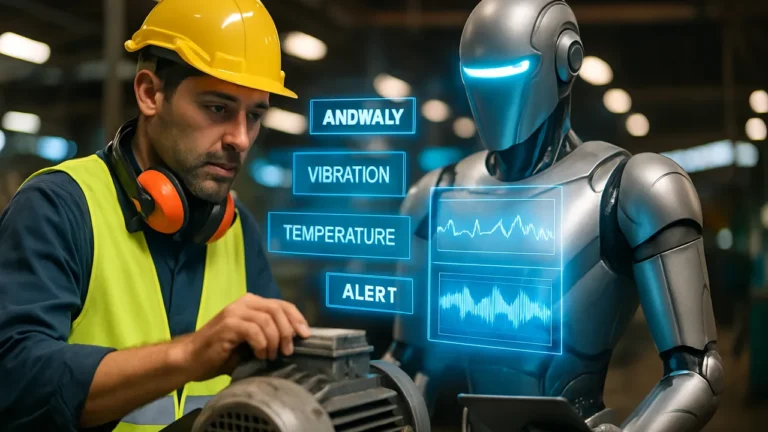

The Best Practices for Training Agentic AI To Resolve Issues Immediately
By providing AI Agent Development Services training, you can resolve all sorts of issues effectively. In other words, it requires a sort of balanced approach that consists of adaptability, technical precision, and ethical considerations as well. Once you start applying these best practices, organizations can seamlessly develop an Agentic AI system that is responsible and reliable by its nature. As AI systems continue to evolve, therefore maintaining a continuous feedback loop becomes a necessity for their improvements and effectiveness.
Define Clear Objectives and Metrics:
Define clear objectives and success criteria before providing training to Agentic AI. You should also define what an effective resolution looks like, including that of response time, accuracy, and that of adaptability. To refine the performance of the AI, KPIs should be tracked systematically. For enterprises scaling these trained agents across business functions, individual-agent KPIs are just the starting point. A comprehensive organizational AI transformation progress monitoring approach tracks the broader impact — cycle time reduction, adoption rates, financial ROI, and strategic capability gains — across the full transformation program, not just individual deployments.
Leverage Reinforcement Learning:
For Agentic AI training, reinforcement learning is critical. It teaches the AI how to make autonomous decisions. Therefore by rewarding appropriate resolutions and penalizing ineffective actions, the AI system automatically learns all sorts of effective strategies. Therefore, by implementing simulation-based training, it aids AI to navigate through complex scenarios before all sorts of deployments.
Related Read- Model Distillation AI – Complete Guide
Integrate Human-in-the-Loop (HITL) Training:
As we all know that Agentic AI aims for nothing but autonomy. Although human oversight remains a critical thing. Therefore, it is the HTIL approach that allows experts to guide to hire AI developer intervene whenever it is necessary, and provide nuanced correction, which enhances learning. Further, this hybrid approach will very well ensure that AI decisions must align with practical considerations and human value.
Encourage Explainability and Transparency:
AI models should be engineered in such a way that they facilitate debugging and foster trust. AI should be trained in such a way that it provides justifications for its decisions. As a result, it helps the developers to assess the AI’s reasoning patterns and correct biases. Further, techniques like SHAP and LIME both aid in improving transparency.
Implement Continuous Learning and Adaptation:
Agentic AI has its ability to learn from new data, and real-world interactions happen to be key for long-term AI effectiveness. You should implement unique mechanisms for continuous learning, where AI refines its approach, solely based on user feedback, emerging trends and contextual variations. It is the active learning model that aids the AI to stay resilient and relevant at once.
Address Ethical Considerations and Bias Mitigation:
For Agentic AI training, training data must be diversified by nature and free from all sorts of biases. In turn, it can seamlessly compromise decision-making fairness. Therefore, you should deploy bias detection tools and enforce implementation of fairness-aware algorithms just to ensure inclusive AI behavior. Further, it establishes ethical guidelines just to prevent unintended consequences in the real-world applications.
Optimize for Scalability and Efficiency:
In the recent period of time, as we all know that AI applications gained huge popularity. Therefore scalability becomes a critical aspect of it. So as an expert you should design such training models that can quickly handle increasing workload without even compromising the performance of it. You should utilize cloud-based infrastructure and serverless architectures to enhance scalability and maintain cost-effectiveness.
AI-Driven Problem Resolution:
AI-driven problem resolution is the use of artificial intelligence to automatically identify, analyze, and resolve operational issues with minimal human intervention. As part of Custom Agentic AI Development Services, intelligent AI agents leverage machine learning, predictive analytics, and real-time data to detect anomalies, identify root causes, and recommend or execute corrective actions before problems escalate. This approach is widely adopted across IT operations, customer service, manufacturing, and enterprise workflows to reduce downtime, improve decision-making, increase operational efficiency, and deliver faster, more accurate issue resolution.
Machine Learning For Issue Resolution:
With the aid of machine learning, you can learn from past issues and improve their ability to quickly resolve new problems over a certain period of time. Simply by analyzing historical data, a Machine Learning model can recognize common errors, suggest all sorts of fixes, and automate the resolution process.
AI Troubleshooting Automation:
Through the AI troubleshooting automation process, the AI system can diagnose and fix issues automatically. For example, through an AI-powered chatbot you can troubleshoot software problems for users. While it is the automated IT system that can seamlessly detect network failures and apply fixes without any kind of human intervention. In turn, this reduces not only downtime but enhances efficiency also.
AI-Based Decision Support:
The AI-based decision support system can quickly analyze a large volume of data just to assist humans in making informed decisions. These systems use machine learning, natural language processing and data analytics to provide recommendations in areas like business operations, finance, and healthcare.
Adaptive AI Learning:
Sometimes AI system evolves and learn new things based on new data and experiences. Adaptive AI model isn’t like traditional AI model, which requires periodic retraining. Adaptive AI Development basically update dynamically, making it highly effective in dynamic environments, like fraud detections, cybersecurity, and personalized recommendations.
Concluding Thoughts
In conclusion, it can be said that Agentic AI stands for a huge leap forward within the landscape of AI. It basically introduces such a system that can quickly decide, act, and perceive. Once you blend autonomy with intelligence, it offers you unparalleled opportunities just to revolutionize the overall industries without any doubt. However, addressing ethical, technical and security challenges happens to be critical for unlocking its full potentials. As technological advancement takes place, Agentic AI not only shape the future, but actively participates in achieving human goals at once.