
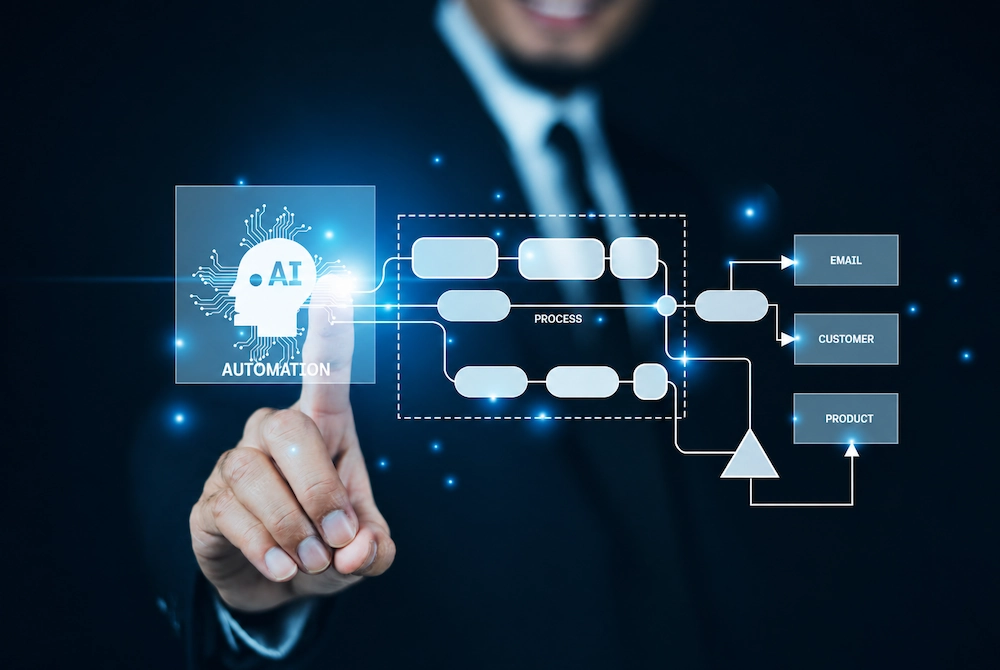

The biggest misconception about AI adoption is that businesses must replace humans to achieve efficiency gains. In reality, the highest-performing organizations are using AI to support human decision-making, automate repetitive work, and accelerate execution, not eliminate people entirely.
This shift toward AI-assisted workflows is transforming how enterprises operate across customer service, finance, HR, manufacturing, sales, and operations.
Businesses integrating AI into human workflows are seeing measurable improvements in:
- Employee productivity
- Decision-making speed
- Operational efficiency
- Customer response times
- Workflow scalability
- Process accuracy
The real value comes from combining human judgment with AI-driven automation.
Organizations that redesign workflows around AI-human collaboration today are building a long-term competitive advantage. If you’re exploring AI workflow transformation opportunities, now is the right time to assess where automation can create the biggest operational impact.
What Does Integrating AI Into Human Workflows Actually Mean?
Integrating AI into human workflows means embedding artificial intelligence into day-to-day business processes so employees can work faster, make better decisions, and reduce manual effort.
Instead of replacing employees, AI becomes a workflow assistant.
In practical terms:
- AI analyzes data
- AI automates repetitive execution
- AI generates recommendations
- Humans validate, decide, and manage exceptions
This is often called a human-in-the-loop AI model.
For example:
- AI drafts customer support responses while agents handle complex conversations
- AI detects financial anomalies while analysts review risks
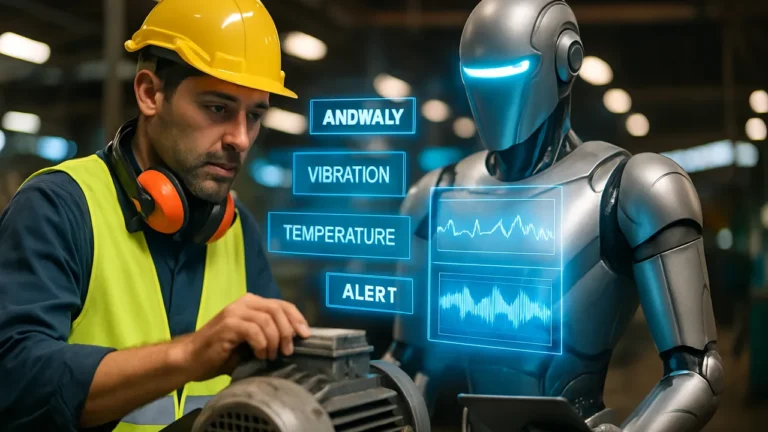
- AI predicts equipment failures while operations teams prioritize maintenance actions
The workflow becomes faster without removing human oversight.
Why Businesses Are Moving Toward AI-Augmented Operations
Modern enterprises are under pressure to do more with existing teams.
Rising operational costs, growing data volumes, and increasing customer expectations are making traditional manual workflows difficult to scale.
AI helps organizations:
- Reduce repetitive workloads
- Improve process speed
- Eliminate operational bottlenecks
- Increase employee capacity
- Improve response accuracy
The companies achieving the strongest ROI are not fully automating operations overnight. They are strategically integrating AI into workflows where humans and machines complement each other.
Key Takeaway
AI works best when it enhances human capability instead of trying to replace human expertise entirely.
Reduce Manual Tasks Using Intelligent Automation
How Integrating AI Into Human Workflows Improves Productivity
Automating Repetitive Administrative Tasks
One of the fastest productivity wins comes from removing repetitive manual work.
Employees across departments spend significant time on tasks like:
- Data entry
- Document processing
- Report generation
- Scheduling
- Email sorting
- Status tracking
AI-powered workflow automation can handle these repetitive activities within seconds.
This allows employees to focus on:
- Strategic planning
- Customer interactions
- Problem-solving
- Innovation
- Relationship management
Use Case: Customer Support Operations
In many support environments, AI now:
- Categorizes incoming tickets
- Identifies urgency levels
- Suggests responses
- Retrieves knowledge-base answers
Human agents step in for escalations, emotional conversations, and complex resolutions.
The result:
- Faster response times
- Lower ticket backlog
- Reduced employee burnout
- Better customer experience
This is workflow amplification not workforce replacement.
Related Read – How AI Workforce Planning Reduces Labor Costs Without Sacrificing Productivity
Accelerating Decision-Making With Real-Time Insights
Traditional reporting systems often create delays between operational events and business decisions.
AI reduces that delay dramatically.
AI systems can:
- Analyze large datasets instantly
- Detect patterns humans may miss
- Generate predictive recommendations
- Surface operational risks early
This helps leaders move from reactive management to proactive decision-making.
Example: Manufacturing Operations
Manufacturing companies are increasingly integrating AI into maintenance workflows.
AI monitors:
- Sensor data
- Machine performance
- Temperature variations
- Production anomalies
The system predicts potential equipment failures before downtime occurs.
Human maintenance teams then prioritize repairs strategically instead of reacting after failures happen.
This improves:
- Production continuity
- Operational efficiency
- Equipment lifespan
- Resource planning
The productivity gains often come from preventing disruption rather than simply working faster.
Improving Collaboration Across Teams
Another major benefit of integrating AI into human workflows is better collaboration.
AI-powered workplace assistants can:
- Summarize meetings automatically
- Retrieve organizational knowledge instantly
- Generate task recommendations
- Centralize workflow intelligence
Instead of employees spending hours searching for information, AI surfaces the right context immediately.
Example: Sales and Marketing Alignment
Sales teams often struggle with fragmented customer data.
AI systems can:
- Analyze buying signals
- Recommend lead prioritization
- Summarize customer interactions
- Predict conversion probability
Marketing and sales teams then operate using shared intelligence instead of disconnected reporting systems.
This improves:
- Lead quality
- Campaign performance
- Sales productivity
- Customer engagement
Reducing Human Error in High-Volume Processes
Manual workflows are vulnerable to:
- Data inconsistencies
- Missed approvals
- Compliance gaps
- Processing delays
AI-assisted workflows reduce these risks significantly.
Common enterprise use cases include:
- Invoice processing
- Insurance claims validation
- Compliance reviews
- Contract analysis
- Procurement approvals
When repetitive decisions become more accurate and consistent, overall business productivity improves naturally.
Which Business Functions Benefit Most From AI-Human Workflows?
AI-human collaboration is creating measurable impact across nearly every enterprise function.
Customer Service
AI improves support operations through:
- Chat assistants
- Smart ticket routing
- Agent copilots
- Automated summaries
Human agents remain essential for empathy, negotiation, and complex problem-solving.
Finance and Accounting
Finance teams use AI for:
- Invoice extraction
- Fraud monitoring
- Forecasting
- Reconciliation support
AI accelerates transaction-heavy workflows while finance professionals focus on analysis and risk management.
Human Resources
HR teams are integrating AI into:
- Resume screening
- Employee onboarding
- Internal support systems
- Policy assistance
This reduces administrative overhead while improving employee experience.
Sales and Marketing
AI supports revenue teams with:
- Lead scoring
- Personalized outreach
- Predictive analytics
- Campaign optimization
Human teams then focus on relationship-building and closing opportunities.
Operations and Supply Chain
Operations teams use AI for:
- Demand forecasting
- Inventory optimization
- Workflow orchestration
- Predictive maintenance
These AI-assisted workflows improve efficiency while reducing operational waste.
Departments seeing the fastest AI ROI are often the ones handling high volumes of repetitive decision-making.
The Biggest Productivity Gains Come From AI + Human Collaboration
AI is powerful, but it still lacks critical human capabilities.
What Humans Still Do Better Than AI
Humans remain essential for:
- Strategic thinking
- Ethical judgment
- Creativity
- Relationship management
- Complex negotiations
- Contextual decision-making
What AI Does Better Than Humans
AI excels at:
- Processing large datasets
- Detecting patterns
- Monitoring workflows continuously
- Automating repetitive execution
- Generating real-time insights
The highest-performing organizations combine both strengths strategically.
The AI Amplification Framework
Companies successfully integrating AI into human workflows often follow a simple operational model.
Step 1: Identify Repetitive Work
Focus on workflows with:
- High manual effort
- Repeated actions
- Large data volumes
- Delayed execution
Step 2: Add AI Assistance
Use AI for:
- Recommendations
- Data extraction
- Categorization
- Predictive analysis
Step 3: Keep Human Oversight
Humans should validate:
- Exceptions
- High-risk decisions
- Customer interactions
- Strategic approvals
Step 4: Measure Operational Impact
Track:
- Time savings
- Throughput improvements
- Error reduction
- Customer response times
Step 5: Continuously Optimize
AI workflows improve over time when organizations refine processes continuously.
Checklist: Signs Your Workflow Is Ready for AI Integration
- Repetitive manual processing
- Frequent operational bottlenecks
- Delayed approvals
- High document volumes
- Data-heavy decision-making
- Rising operational costs
Organizations that start with focused workflow improvements typically achieve faster adoption success.
If you’re evaluating AI workflow opportunities, connecting with AI specialists early can help prioritize the highest-impact automation initiatives.
Build Smarter Workflows With AI Agents
Common Challenges When Integrating AI Into Human Workflows
Employee Resistance
Many employees initially fear AI adoption because they associate it with job replacement.
Successful organizations position AI as:
- A productivity assistant
- A workload reduction tool
- A workflow optimization system
Clear communication is critical.
Poor Workflow Design
A common mistake is adding AI to broken processes. AI cannot fix inefficient workflows automatically.
Businesses must redesign workflows intentionally before scaling automation.
Data and Integration Issues
AI systems rely heavily on:
- Clean enterprise data
- System connectivity
- Workflow visibility
Disconnected systems reduce AI effectiveness significantly.
Governance and Compliance Risks
Organizations also need:
- Human oversight
- Responsible AI policies
- Security controls
- Compliance monitoring
AI adoption without governance creates operational risk.
Key Takeaway
Successful AI integration is more about operational strategy than simply purchasing AI tools.
How to Integrate AI Into Enterprise Workflows Without Disrupting Productivity?
Enterprises can integrate AI into workflows without disrupting productivity by starting with targeted, low-risk processes and introducing AI as an augmentation layer rather than replacing existing workflows immediately. Begin with repetitive tasks where AI can reduce manual effort, keep human oversight for complex or high-impact decisions, integrate AI with existing enterprise systems, and measure productivity, accuracy, processing time, and employee adoption before expanding automation. A phased approach allows teams to adapt gradually, identify workflow issues early, and scale AI across the organization without creating unnecessary operational disruption.
Start With One High-Impact Workflow
Instead of transforming everything at once, begin with:
- Customer onboarding
- Invoice approvals
- Internal reporting
- Support ticket management
Small workflow wins build organizational confidence.
Focus on Augmentation Before Full Automation
AI adoption improves when employees see AI reducing workload rather than threatening jobs.
Augmentation-first strategies typically achieve:
- Better adoption
- Faster ROI
- Lower resistance
Measure Productivity Metrics Early
Track operational outcomes such as:
- Time saved
- Cost reduction
- Workflow throughput
- Employee productivity
- Customer satisfaction
AI initiatives tied to measurable business outcomes scale more successfully.
Build Cross-Functional AI Teams
Successful enterprise AI adoption requires collaboration between:
- IT teams
- Operations leaders
- Business stakeholders
- Compliance teams
AI transformation is both a technology initiative and an operational change program.
Use Case: Finance Operations
A finance team processing thousands of invoices monthly integrated AI into its accounts payable workflow.
AI extracted invoice data automatically while employees reviewed exceptions.
The outcome:
- Faster invoice processing
- Fewer manual errors
- Improved operational efficiency
- Better finance team productivity
This hybrid approach delivered faster ROI than attempting full automation immediately.
Integrating Generative AI Into Existing Workplace Tools
Successful AI integration does not always require employees to adopt another standalone application. Generative AI can be embedded into workplace tools such as CRM platforms, ERP systems, Microsoft 365, collaboration tools, customer support platforms, knowledge bases, and document management systems. This allows employees to use AI for knowledge retrieval, summarization, document analysis, content generation, recommendations, and routine task automation within the workflows they already use.
A practical guide to integrating Generative AI into workplace tools and workflows should start with identifying where employees spend the most time searching for information, creating repetitive content, reviewing documents, or moving data between systems.
Future of AI-Human Workflows in Enterprises
AI-human collaboration is evolving rapidly.
Enterprises are now moving toward:
- AI copilots
- Intelligent assistants
- Autonomous workflow orchestration
- Predictive operational systems
Future workflows will become increasingly adaptive and data-driven.
Organizations that integrate AI into workflows today are building operational models designed for long-term scalability.
The companies that outperform competitors over the next decade will likely be the ones that combine:
- Human expertise
- Workflow intelligence
- AI-assisted execution
Conclusion
Integrating AI into human workflows improves productivity by reducing repetitive work, accelerating decisions, improving operational efficiency, and helping employees focus on higher-value responsibilities.
The most successful organizations are not replacing humans with AI. They are redesigning workflows so humans and AI work together strategically.
This approach creates:
- Faster operations
- Better employee productivity
- Improved customer experiences
- More scalable business processes
As enterprise AI adoption accelerates, workflow intelligence will become a major competitive advantage.
Organizations that begin optimizing AI-assisted workflows now will be better positioned to scale efficiently in the years ahead.
Ready to identify where AI can improve productivity inside your business workflows? Connect with our AI experts to explore high-impact workflow automation opportunities tailored to your operations.
FAQs
Businesses can integrate Generative AI into existing CRM, ERP, collaboration, productivity, support, and knowledge systems. Start with a specific workflow, connect the required data securely, define permissions and human approval points, measure the outcome, and expand the integration after it performs reliably.
AI improves productivity by reducing manual work, accelerating data analysis, automating routine processes, and helping employees focus on higher-value tasks. This leads to faster operations, fewer errors, and better resource utilization.
Departments like customer service, finance, HR, sales, marketing, and operations benefit significantly from AI-assisted workflows. AI helps streamline repetitive tasks, improve decision-making, and increase operational efficiency across teams.
AI can automate repetitive activities, but human employees are still essential for strategic thinking, creativity, relationship management, and complex decision-making. The most effective approach is AI-human collaboration rather than full replacement.
Companies should begin with one high-impact workflow such as customer support, invoice processing, or reporting automation. Starting small, measuring productivity gains, and keeping human oversight helps ensure successful AI adoption.


![How to Build an Enterprise Knowledge Base for AI Agents [5-Step Guide]](https://www.intellectyx.com/wp-content/uploads/2026/09/enterprise-knowledge-base-methodology-ai-agents-768x432.webp)