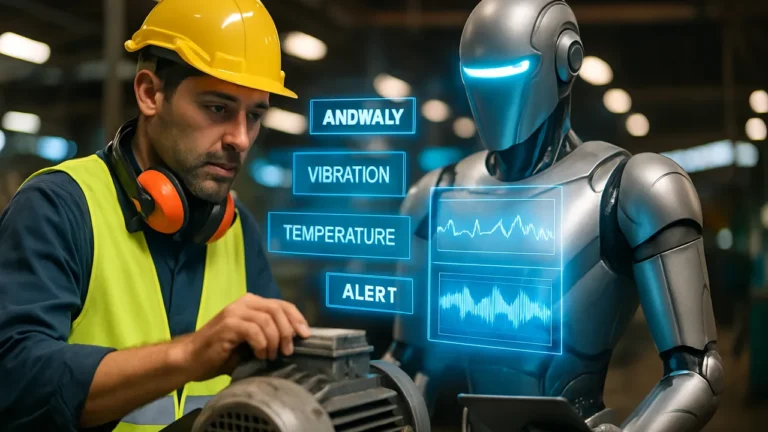

AgentOps is the operational framework that enables organizations to deploy, monitor, coordinate, and continuously optimize autonomous AI agents allowing systems to function independently while remaining controlled, observable, and aligned with business goals.
In simple terms, AgentOps turns AI from a passive tool into an active, self-operating system capable of making decisions and improving over time.
Why AgentOps Matters Now (From Automation to Autonomy)
Enterprise AI has evolved rapidly. What started as rule-based automation has now progressed into autonomous AI systems that can analyze, decide, and act without constant human oversight. Businesses are increasingly relying on AI agents to run workflows across customer service, sales, IT operations, and more.
However, as organizations scale AI adoption, a critical gap becomes visible lack of operational control. Without a structured system in place, AI agents can behave inconsistently, make untraceable decisions, and fail to improve over time.
This is where AgentOps and Its Role in autonomous ai agent development system management become essential. It provides the operational backbone needed to ensure AI systems remain reliable and scalable.
Key Challenges Without AgentOps
- AI agents operate in isolation without coordination
- Decisions are difficult to track or explain
- Performance degrades without feedback loops
- Scaling leads to unpredictability
👉 Takeaway: AI alone enables automation, but AgentOps enables controlled autonomy at scale.
What Is AgentOps? (Clear and Practical Explanation)
AgentOps is best understood as the discipline of managing AI agents throughout their lifecycle in real-world environments. It ensures that agents not only perform tasks but also collaborate, adapt, and improve continuously.
At its core, AgentOps brings three essential capabilities into AI systems:
- Control: Defining what agents can do and setting boundaries to prevent unintended actions
- Visibility: Tracking decisions, behaviors, and outcomes for transparency
- Optimization: Continuously improving agent performance using feedback
Think of it as a centralized system that ensures all AI agents are aligned with business goals while operating independently.
Simple analogy: AgentOps works like air traffic control for AI agents, ensuring everything runs smoothly without collisions or confusion.
AgentOps vs MLOps vs AIOps (Strategic Clarity for Leaders)
Many organizations already use MLOps or AIOps, but AgentOps serves a fundamentally different purpose. Understanding this distinction is crucial for building a scalable AI strategy.
MLOps focuses on building and deploying machine learning models. It ensures that models are trained properly and perform accurately in production environments. AIOps, on the other hand, uses AI to automate IT operations such as monitoring systems and detecting anomalies.
AgentOps goes a step further. It is responsible for managing how AI systems behave as autonomous agents in real-world scenarios.
Key Differences
- MLOps → Builds and deploys AI models
- AIOps → Optimizes IT operations using AI
- AgentOps → Manages autonomous decision-making systems
Without AgentOps, AI remains a static capability. With AgentOps, AI becomes a dynamic, decision-making system.
How AgentOps Works (The Autonomous Decision Loop)
AgentOps operates through a continuous feedback loop that allows AI systems to learn and improve without manual intervention. This loop ensures that every action taken by an AI agent contributes to better performance over time.
Core Loop:
Input → Decision → Action → Feedback → Optimization
In practice, this means that AI agents are constantly evaluating data, making decisions, executing actions, and learning from outcomes.
How This Works in Real Life
Consider a customer support system powered by AI:
- A customer submits a query
- The AI agent analyzes intent and urgency
- It responds or escalates the issue
- The system tracks customer satisfaction
- Future responses are improved based on feedback
This loop runs continuously, allowing the system to become more accurate and efficient with every interaction.AgentOps enables AI systems to self-improve, rather than remain static after deployment.
Ready to move from automation to autonomy?
Core Components of an AgentOps Framework
To enable true autonomy, AgentOps relies on multiple interconnected components. These components ensure that AI systems are not only functional but also scalable and reliable.
Key Components Explained
- Agent Lifecycle Management
This involves deploying, updating, and maintaining AI agents over time. It ensures that agents evolve alongside business needs. - Observability Layer
Observability provides visibility into how agents behave. It tracks decisions, logs actions, and identifies performance issues. - Orchestration Engine
In environments with multiple agents, orchestration ensures that they work together seamlessly rather than in conflict. - Feedback and Learning Systems
These systems collect outcomes and use them to refine agent behavior, enabling continuous improvement.
Why These Components Matter
Together, these elements transform AI from isolated tools into coordinated systems capable of complex decision-making.
Real-World Use Cases of AgentOps
AgentOps is already being applied across industries to enable autonomous operations. These use cases highlight its real-world impact.
1. Customer Support Automation
Organizations deploy multiple AI agents to handle different aspects of support. Some handle basic queries, while others manage escalation or sentiment analysis.
- Faster response times
- Reduced operational costs
- Improved customer satisfaction
2. AI-Driven Sales Engagement
Sales teams use AI agents to automate lead qualification and follow-ups. These agents operate continuously, ensuring no opportunity is missed.
- Personalized outreach at scale
- Consistent communication
- Higher conversion rates
3. Autonomous IT Operations
In IT environments, AI agents monitor systems, detect anomalies, and trigger corrective actions automatically.
- Reduced downtime
- Faster issue resolution
- Scalable infrastructure management
Key Insight: AgentOps enables end-to-end workflow automation, not just individual task automation.
Business Benefits of AgentOps
As organizations adopt AgentOps, they begin to see both operational and strategic benefits. These advantages go beyond cost savings and directly impact business performance.
Operational Benefits
- Scalability without increasing headcount
- Faster and more accurate decision-making
- Reduced manual intervention
Strategic Benefits
- Improved agility and innovation
- Better use of data for decision-making
- Stronger competitive positioning
In addition, industry research indicates growing ROI from AI-driven operations:
- [STAT: Gartner, 2025 – Majority of enterprises adopting AI systems]
- [STAT: McKinsey, 2024 – Significant productivity improvements from AI]
Takeaway: AgentOps transforms AI into a core driver of business growth.
Risks of Autonomous AI Without AgentOps
While autonomy offers significant advantages, it also introduces risks if not managed properly. Without AgentOps, organizations may struggle to maintain control over their AI systems.
Common Risks
- Inconsistent or incorrect decisions
- Lack of accountability
- Conflicts between multiple agents
- Security and compliance issues
To address these risks, organizations must implement governance frameworks that ensure transparency and control.
Essential Governance Measures
- Decision audit trails
- Explainability mechanisms
- Human-in-the-loop checkpoints
Takeaway: AgentOps ensures that autonomy is balanced with control, trust, and accountability.
Struggling with AI control? See how AgentOps solves it
AgentOps Implementation Framework (Practical Playbook)
Implementing AgentOps requires a structured approach. Organizations should start small and scale gradually while maintaining control and visibility.
Step-by-Step Approach
Step 1 — Define Agent Roles
Clearly define what each agent is responsible for and where human intervention is required.
Step 2 — Build Observability
Implement systems to track decisions, actions, and performance metrics.
Step 3 — Create Feedback Loops
Use real-world outcomes to improve agent behavior continuously.
Step 4 — Enable Orchestration
Ensure that multiple agents work together efficiently without duplication.
Step 5 — Scale with Governance
Introduce compliance checks and monitoring systems as operations expand.
Quick Readiness Checklist
Before scaling AgentOps, ensure:
- You have visibility into agent decisions
- Performance metrics are clearly defined
- Fallback mechanisms are in place
- Continuous learning is enabled
Takeaway: A structured approach ensures that AgentOps delivers long-term value.
The Future of AgentOps: Autonomous Enterprises
The future of enterprise operations is increasingly autonomous. Organizations are moving toward systems where AI not only supports decisions but also executes them independently.
Emerging Trends
- Multi-agent ecosystems managing complex workflows
- AI systems that self-optimize without human input
- AI supervising other AI agents
In this future, businesses will rely on AI to manage everything from customer interactions to supply chains in real time.
Key Insight: AgentOps will become the foundation of AI-driven enterprises, enabling scalable and intelligent operations.
Conclusion: Why AgentOps Is the Backbone of AI Autonomy
AgentOps and Its Role in Autonomous System Management is no longer a future concept, it is a present-day necessity. As AI systems become more autonomous, organizations must ensure they remain controlled, transparent, and aligned with business goals. AgentOps Services provides the framework to achieve this balance.
Businesses that adopt AgentOps early will:
- Scale operations efficiently
- Improve decision-making capabilities
- Gain a sustainable competitive advantage
Ready to move from AI experimentation to real autonomy? Connect with our AI experts to design and implement your AgentOps strategy.
FAQs
MLOps focuses on building and deploying machine learning models, while AIOps uses AI to optimize IT operations. AgentOps goes further by managing autonomous AI agents and their decision-making processes in real-world environments.
As AI systems become more autonomous, they require continuous monitoring, coordination, and optimization. AgentOps ensures these systems remain controlled, scalable, and reliable while delivering consistent outcomes.
- Improved decision-making speed and accuracy
- Scalable AI operations without increasing headcount
- Continuous performance optimization
- Better visibility and control over AI systems
AgentOps helps reduce risks such as inconsistent decisions, lack of transparency, agent conflicts, and compliance issues by introducing governance, observability, and feedback mechanisms.
Implementation typically involves defining agent roles, building observability systems, creating feedback loops, enabling orchestration, and scaling with governance frameworks.