


What started as isolated AI pilots has evolved into enterprise-wide transformation initiatives. From customer support and workflow automation to predictive operations and AI-powered decision intelligence, businesses are now embedding AI directly into core operational workflows.
The shift is strategic. Enterprises that effectively integrate AI into business operations are improving productivity, responding faster to market changes, and creating operational advantages that competitors struggle to match.
For leadership teams evaluating long-term growth and operational resilience, AI is increasingly becoming part of the business infrastructure itself. Enterprises are no longer asking whether AI matters. They are asking where AI can deliver measurable ROI fastest.
Organizations looking to evaluate enterprise AI opportunities should begin by identifying operational bottlenecks, repetitive workflows, and high-friction processes where intelligent automation can create immediate impact.
What Are AI Business Solutions?
AI Business Solutions refer to AI-powered technologies and systems designed to improve, automate, or optimize business operations.
Unlike standalone AI tools that solve isolated problems, enterprise AI solutions are integrated into workflows, systems, and operational processes.
These solutions typically include:
- AI workflow automation
- Predictive analytics platforms
- AI copilots and AI coworkers
- Intelligent document processing
- AI-powered customer service systems
- Enterprise search and knowledge assistants
- Generative AI business applications
- Operational intelligence platforms
The goal is not simply automation. The goal is operational intelligence.
Modern enterprises want systems that can:
- analyze data,
- understand context,
- assist employees,
- automate repetitive work,
- and help leaders make faster decisions.
This is one of the biggest reasons AI Business Solutions are becoming a top enterprise investment priority in 2026.
Why AI Investment Is Accelerating in 2026
Rising Operational Costs Are Forcing Automation
Enterprises across industries are facing increasing operational pressure.
Labor costs continue to rise. Process complexity is increasing. Teams are expected to do more with fewer resources. At the same time, customers expect faster service and better experiences.
Traditional scaling models are becoming difficult to sustain. This is where AI Business Solutions are creating value.
AI-powered systems can automate repetitive operational tasks such as:
- invoice processing,
- report generation,
- workflow approvals,
- customer support interactions,
- compliance checks,
- and data extraction.
For example, a financial services organization processing thousands of loan applications monthly can use AI-powered document intelligence to extract data, validate documents, and accelerate approvals significantly faster than manual teams alone.
The result:
- reduced processing time,
- fewer operational delays,
- and lower administrative overhead.
Transform manual operations into intelligent AI-driven workflows.
Enterprises Need Faster Decision-Making
One of the biggest operational challenges enterprises face today is decision latency.
Most organizations have massive amounts of data spread across disconnected systems:
- CRMs,
- ERPs,
- spreadsheets,
- support systems,
- analytics dashboards,
- and internal knowledge repositories.
But having data does not automatically create business intelligence.
Executives are increasingly realizing that operational speed depends on decision speed.
AI Business Solutions help enterprises:
- surface insights faster,
- detect operational anomalies,
- generate predictive recommendations,
- and provide real-time visibility into business performance.
Enterprises are drowning in data but starving for decisions.
AI-powered analytics platforms are now helping leaders move from reactive operations to proactive decision-making. Instead of waiting for weekly reports, leaders can receive real-time AI-driven operational recommendations.
That shift alone can significantly improve agility.
AI Is Improving Workforce Productivity
In 2026, enterprise AI adoption is increasingly focused on employee productivity.
Organizations are deploying:
- AI assistants,
- enterprise copilots,
- automated meeting summaries,
- AI-generated documentation,
- intelligent knowledge retrieval systems,
- and workflow support agents.
These tools reduce low-value administrative work and allow employees to focus on higher-impact activities.
Use Case: AI in Customer Support Operations
A global support team handling thousands of tickets daily can use AI-powered support agents to:
- classify requests,
- generate suggested responses,
- route tickets intelligently,
- and automate common issue resolution.
Human agents still manage complex interactions, but AI reduces repetitive workload significantly.
The outcome:
- faster response times,
- improved customer satisfaction,
- and higher support team productivity.
The productivity gains from AI Business Solutions are becoming too significant for enterprises to ignore.
Generative AI Has Changed Executive Expectations
The rise of generative AI development has accelerated enterprise urgency around AI investment.
Executives have now seen how AI can:
- generate content,
- summarize information,
- analyze documents,
- assist employees,
- and interact conversationally with users.
This has changed how leadership teams think about operational efficiency.
Instead of viewing AI as a long-term innovation initiative, many organizations now see AI as an immediate business capability.
Competitive pressure is also playing a major role.
No enterprise wants to fall behind while competitors improve:
- speed,
- customer experience,
- operational efficiency,
- and workforce productivity using AI.
As a result, enterprise AI investment discussions are now happening at the boardroom level.
The Biggest Enterprise AI Business Solution Use Cases in 2026
AI for Customer Support Operations
Customer support remains one of the highest-impact enterprise AI use cases.
AI Business Solutions are helping organizations:
- automate repetitive customer interactions,
- provide 24/7 support,
- enable multilingual communication,
- and reduce ticket resolution time.
AI agents can now handle:
- password resets,
- account inquiries,
- order tracking,
- FAQ resolution,
- and basic troubleshooting.
This reduces support costs while improving response speed.
For enterprises managing global operations, AI-powered customer support also improves scalability without proportional headcount growth.
AI for Enterprise Workflow Automation
Workflow automation is evolving beyond simple rule-based automation.
Modern AI workflow systems can:
- understand documents,
- interpret requests,
- extract context,
- and make operational recommendations.
Use Case: AI in Insurance Claims Processing
An insurance company processing claims manually may face:
- documentation delays,
- verification bottlenecks,
- and operational inefficiencies.
AI-powered workflow automation can:
- extract claim information,
- validate supporting documents,
- flag fraud indicators,
- and prioritize high-risk cases.
The result is faster claims processing and improved operational accuracy.
This is why workflow automation remains one of the fastest-growing enterprise AI investment areas.
AI for Manufacturing and Operations
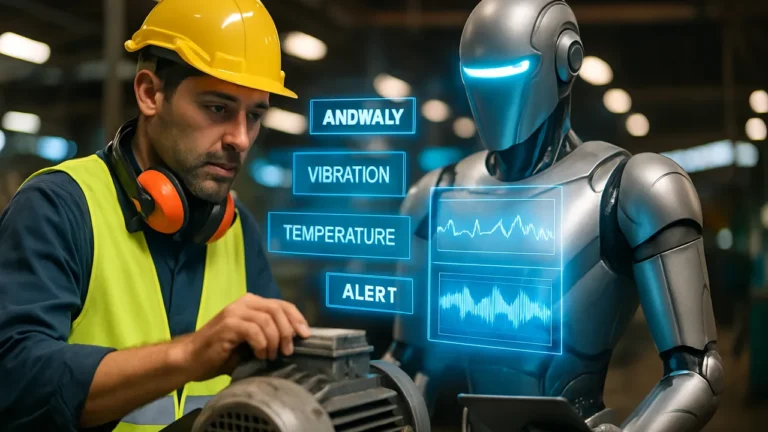
Manufacturing enterprises are increasingly investing in AI Business Solutions to improve operational visibility and reduce downtime.
Key use cases include:
- predictive maintenance,
- AI defect detection,
- supply chain intelligence,
- inventory optimization,
- and operational monitoring.
For example, predictive AI systems can analyze machine sensor data to identify potential equipment failures before breakdowns occur.
That helps organizations:
- reduce downtime,
- improve production continuity,
- and lower maintenance costs.
In industries where downtime directly impacts revenue, AI-driven operational intelligence creates measurable financial value.
AI for Sales and Revenue Operations
Sales teams are increasingly using AI to improve pipeline efficiency and forecasting accuracy.
Enterprise AI solutions now support:
- lead prioritization,
- AI-generated proposals,
- sales forecasting,
- customer intent analysis,
- and automated engagement recommendations.
The 4-Layer AI Revenue Acceleration Model
1. Data Visibility
Centralize customer and sales data.
2. Predictive Scoring
Identify high-conversion opportunities.
3. Automated Engagement
Use AI to streamline outreach and follow-ups.
4. AI-Assisted Decision-Making
Help sales leaders forecast and prioritize effectively.
The biggest advantage is not replacing sales teams.
It is helping teams operate more intelligently and efficiently.
AI for Enterprise Knowledge Management
One of the most underestimated enterprise productivity problems is information fragmentation.
Employees waste significant time searching for:
- documents,
- policies,
- operational procedures,
- and internal knowledge.
AI-powered enterprise search systems are solving this problem.
Modern AI knowledge assistants can:
- retrieve contextual answers,
- summarize internal documentation,
- and provide conversational access to enterprise knowledge.
This is especially valuable for:
- onboarding,
- operations,
- compliance,
- and distributed teams.
Many enterprises are discovering that operational inefficiency often starts with inaccessible knowledge.
Why Enterprises Are Moving Beyond Basic Automation
Traditional automation systems work well for repetitive, rule-based tasks.
But they struggle when workflows require:
- contextual understanding,
- dynamic decision-making,
- or unstructured data processing.
That is where AI changes the equation.
AI-powered automation adds:
- reasoning,
- adaptability,
- predictive intelligence,
- and workflow flexibility.
This shift from static automation to intelligent operations is a major reason enterprises are increasing AI investments in 2026.
How Enterprises Evaluate ROI From AI Business Solutions
Enterprise leaders are becoming more disciplined about AI ROI measurement.
The most successful organizations focus on measurable business outcomes rather than AI hype.
The 5 Metrics Executives Care About Most
- Productivity improvement
- Cost reduction
- Operational speed
- Employee efficiency
- Customer experience enhancement
The AI Value Identification Model
Step 1 — Identify Repetitive Workflows
Find processes consuming excessive manual effort.
Step 2 — Measure Operational Friction
Identify delays, bottlenecks, and inefficiencies.
Step 3 — Estimate Automation Potential
Determine where AI can augment or automate work.
Step 4 — Prioritize High-ROI Processes
Focus on workflows with measurable business impact.
Step 5 — Scale Incrementally
Expand AI adoption systematically across operations.
Enterprise AI Success Checklist
Successful AI initiatives usually include:
- Executive sponsorship
- Clear business KPIs
- High-quality data access
- Workflow integration
- Human oversight
- Scalable infrastructure
- Change management planning
Organizations that skip these fundamentals often struggle to scale AI successfully.
Accelerate enterprise growth with intelligent AI business solutions.
The Biggest Challenges Enterprises Face With AI Adoption
Despite growing investment, enterprise AI adoption still comes with challenges.
Data Silos and Legacy Systems
Many organizations operate on disconnected systems that limit AI effectiveness. Poor data quality and fragmented infrastructure remain major adoption barriers.
Security and Governance Concerns
Enterprises must address:
- data privacy,
- compliance,
- governance,
- and AI security risks.
This is especially critical in regulated industries such as:
- healthcare,
- banking,
- insurance,
- and manufacturing.
AI Skills and Change Management
Technology alone does not guarantee success.
Employees need:
- AI literacy,
- workflow training,
- and operational clarity.
Organizations also need change management strategies to reduce resistance and encourage adoption.
The Risk of Implementing AI Without Strategy
One of the biggest mistakes enterprises make is adopting AI tools without operational alignment.
Successful AI transformation starts with business objectives, not technology trends. The most effective enterprise AI strategies focus on solving operational problems first and selecting technology second.
Organizations evaluating AI adoption should prioritize measurable workflow improvements instead of isolated AI experiments.
What Enterprise AI Strategy Will Look Like Beyond 2026
Enterprise AI is moving toward:
- AI coworkers,
- autonomous workflows,
- agentic AI systems,
- multimodal intelligence,
- and real-time operational orchestration.
Future enterprise environments will likely combine:
- humans,
- AI agents,
- automation systems,
- and predictive intelligence into connected operational ecosystems.
By the end of the decade, AI orchestration layers may become as essential to enterprises as ERP systems are today.
The companies investing strategically now will likely gain long-term operational advantages.
Conclusion
AI Business Solutions are rapidly becoming a competitive requirement for modern enterprises.
In 2026, organizations are investing in AI not simply because it is innovative, but because it directly improves:
- operational efficiency,
- workforce productivity,
- business agility,
- customer experience,
- and decision-making speed.
The enterprises achieving the best results are not necessarily deploying the most AI tools. They are integrating AI effectively into business workflows and operational processes.
As enterprise competition intensifies, organizations that fail to modernize operations with AI may struggle to maintain efficiency and scalability. Businesses evaluating AI adoption should focus on high-impact operational use cases, measurable ROI, and long-term workflow transformation.
Organizations ready to accelerate enterprise AI adoption can benefit from working with experienced AI transformation partners to identify the right opportunities, prioritize implementation, and scale strategically. Connect with our AI Experts to explore how AI Business Solutions can improve your enterprise operations, workflows, and business outcomes.
FAQs
AI Business Solutions improve operational efficiency by automating repetitive workflows, reducing manual effort, accelerating approvals, improving data analysis, and enabling real-time operational insights across departments.
Industries rapidly adopting AI Business Solutions include banking, healthcare, manufacturing, insurance, logistics, retail, and financial services due to their high operational complexity and automation opportunities.
Traditional automation follows fixed rules and structured workflows, while AI-powered automation can understand context, process unstructured data, make recommendations, and adapt to changing operational conditions.
Businesses should begin by identifying repetitive workflows, operational bottlenecks, and high-friction processes where AI can deliver measurable efficiency improvements and operational ROI quickly.
AI Business Solutions are integrated into enterprise workflows, systems, and operations to solve large-scale business challenges, while standalone AI tools typically handle isolated tasks or individual productivity needs. Enterprise AI solutions focus on scalability, automation, operational efficiency, governance, and measurable business outcomes across departments.

![How to Build an Enterprise Knowledge Base for AI Agents [5-Step Guide]](https://www.intellectyx.com/wp-content/uploads/2026/09/enterprise-knowledge-base-methodology-ai-agents-768x432.webp)
![Top 10 AI Agent Development Companies in USA [2026]](https://www.intellectyx.com/wp-content/uploads/2025/12/Top-AI-Agent-Development-Companies-in-USA-768x432.webp)